The question of infant care versus nanny often arrives at a tender, practical moment: your baby needs dependable care, and your family needs a routine that feels sustainable. Both choices can offer warmth, safety and meaningful attention. The difference lies in the kind of daily environment your child experiences, the support available to your household, and the developmental foundation you hope to build from the earliest years.
For many parents, the best choice is not simply the option that covers working hours. It is the one that gives their child consistent, responsive care while fitting the family’s values, schedule and long-term goals.
Infant Care Versus Nanny: The Core Difference
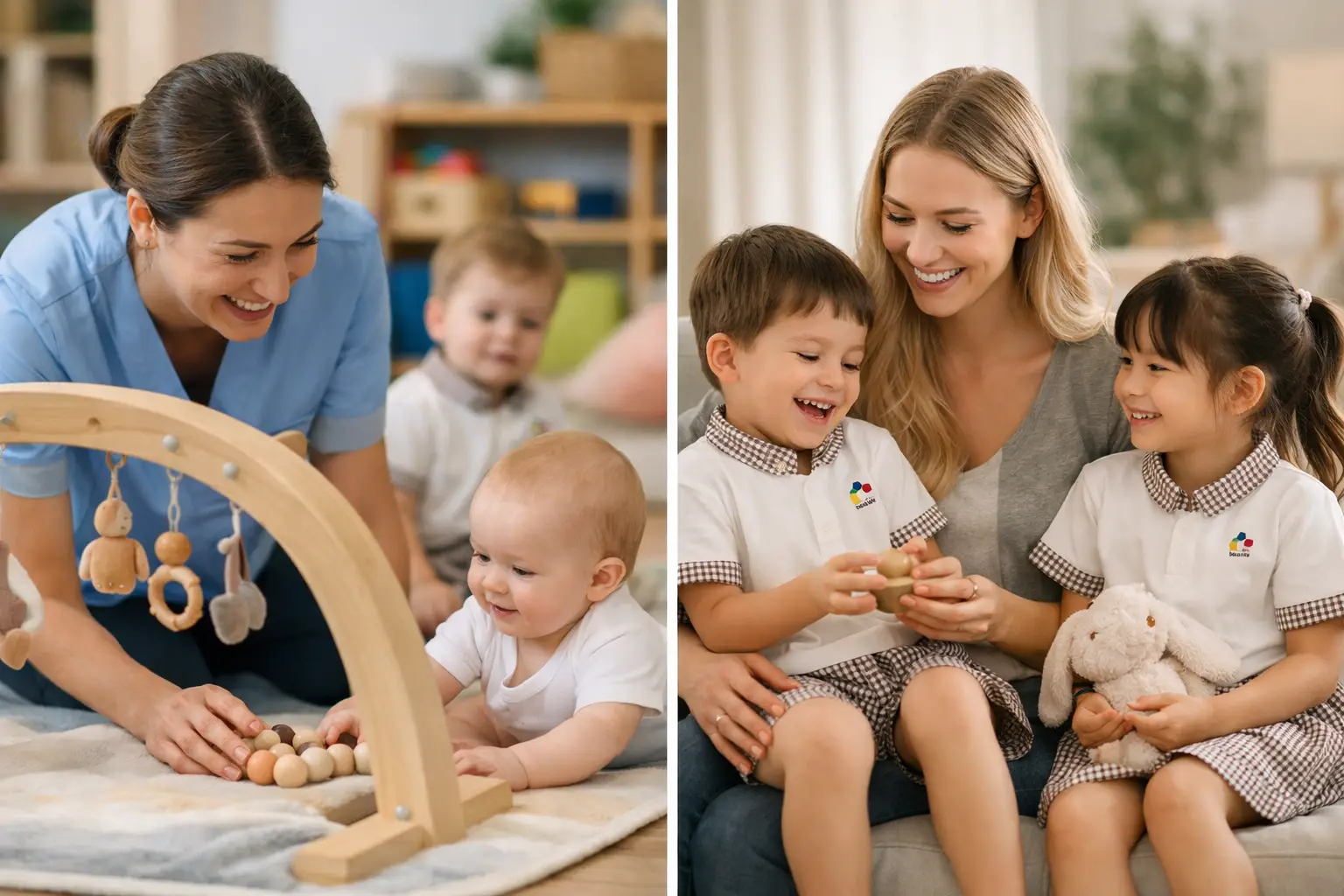
A nanny provides care in your home, usually focusing on your child’s individual routines, feeding, sleep and day-to-day well-being. This can be especially reassuring during the early months, when babies are still settling into predictable patterns and parents may value the familiarity of home.
Infant care takes place in a dedicated early childhood setting, where trained educators care for children through a structured daily rhythm. The focus extends beyond supervision. A quality programme supports physical development, early communication, sensory exploration, social confidence and growing independence in ways that are appropriate for each child’s stage.
Neither setting is automatically better for every family. The more useful question is this: where will your child receive consistently nurturing care, purposeful stimulation and the right level of support for their individual needs?
The Case for a Nanny
The greatest advantage of a nanny is personalisation at home. Your baby can remain in a familiar environment, follow an established sleeping routine and avoid the morning commute. For parents with irregular work patterns, frequent travel, or several children with different schedules, this flexibility can be valuable.
A nanny may also provide focused one-to-one attention during feeds, nappy changes, play and settling. When a child is unwell or going through a particularly sensitive transition, care at home can feel calmer and more convenient. Parents can remain closely involved in the rhythm of the day, particularly if they work from home.
However, one-to-one care does not automatically mean a broad developmental experience. The quality of a baby’s day depends heavily on the caregiver’s knowledge, energy, consistency and ability to plan age-appropriate interaction. A caring nanny can sing, talk, read and play beautifully with a child, but parents may need to provide guidance, materials and expectations to ensure these experiences happen regularly.
There is also a practical consideration. If the nanny is unwell, takes leave or is unavailable unexpectedly, the family may need to arrange a replacement at short notice. For some parents, the responsibility of managing one person’s availability, training and household expectations can become demanding alongside work and family life.
What Quality Infant Care Can Offer
A thoughtfully designed infant care programme brings care and early learning together. Babies are not expected to sit through lessons or achieve adult-style milestones. Instead, their educators create repeated opportunities for meaningful interaction: naming objects during routines, responding to sounds, exploring textures, moving safely, listening to language and building trust through responsive care.
These small moments matter. During infancy, children learn through relationships and repetition. A predictable routine helps them feel secure, while carefully planned play supports attention, memory, coordination and curiosity. When educators observe each child closely, they can adjust activities to suit emerging interests and developmental readiness.
A centre also gives children gentle exposure to other people, voices and routines. They begin to recognise familiar educators, notice peers and take part in simple shared experiences. Social development at this age may look modest – watching another child, smiling during a song, waiting briefly for a toy – but these are early building blocks for confidence and communication.
For working parents, a reliable centre-based programme can create a welcome sense of continuity. Professional teams work together, daily routines are established and care does not depend on one individual being available. This structure can make handovers, planning and family routines more manageable.
Development Is More Than Keeping a Baby Busy
When comparing infant care and nanny support, it helps to look beyond whether your child will be safely occupied. Ask what they will hear, touch, practise and communicate each day.
A strong infant programme uses play with intention. Songs and rhythmic activities can support listening and early language. Tummy time, reaching, crawling and movement play strengthen physical development. Sensory materials invite curiosity, while warm conversations during care routines help babies connect words with people, objects and actions.
Bilingual exposure can be particularly meaningful in Singapore, provided it is delivered naturally and consistently. Infants benefit from hearing language used in real contexts: greetings, songs, stories, meals and play. The goal is not to rush speech, but to nurture familiarity, confidence and a positive relationship with communication.
As children grow, an all-round programme can continue building these foundations through music, exploratory science, active kinaesthetic learning and self-help skills. At A2E Kids, this developmental approach includes a structured Music Education Programme with complimentary violin and piano enrichment, alongside bilingual learning and hands-on experiences designed to encourage focus, creativity and communication.
Questions to Ask Before Choosing Infant Care
Not every infant care setting offers the same level of care or educational quality. A visit should help you understand not only what the rooms look like, but how adults and children relate to one another.
Observe whether educators speak gently and responsively to babies, including those who are not yet verbal. Notice whether they are down at the children’s level, whether routines appear calm, and whether babies have safe space to move, rest and explore. Ask how the team communicates about feeds, naps, milestones and any changes in your child’s needs.
It is also wise to ask about educator continuity, staff qualifications, group size, hygiene procedures and the daily programme. A well-planned day should have rhythm without becoming rigid. Infants need both stimulation and rest, active movement and quiet comfort, familiar repetition and new experiences.
Parents should also consider the journey. A wonderful programme may still be unsuitable if the commute makes mornings rushed or prevents you from spending enough unhurried time with your child. The right choice supports the well-being of the whole family, not only the childcare timetable.
Questions to Ask When Hiring a Nanny
If home-based care suits your family, clarity matters from the beginning. Discuss more than feeding, naps and safety. Talk about how your nanny will engage your baby during awake time, how they will support language exposure, how much outdoor time is realistic, and how you will share updates throughout the day.
A written routine can be helpful, particularly in the first few months. It may cover sleep cues, feeding preferences, comfort strategies, hygiene, screen use, visitors and emergency procedures. The routine should leave room for your child’s changing needs, but it gives everyone a shared standard of care.
It is equally helpful to plan for absences. Consider who will care for your child if your nanny is on leave or unwell. Families who choose a nanny often benefit from creating a small support network early, rather than trying to solve the problem during a difficult week.
Cost, Flexibility and the Hidden Trade-Offs
Cost comparisons are rarely straightforward. A nanny may appear more economical when caring for more than one child, particularly if parents need extended hours. Yet there may be additional expenses related to employment arrangements, leave, food, activities and cover during absences. Infant care fees are generally more predictable, but may involve fixed operating hours and a daily commute.
Flexibility is another genuine trade-off. Home care can adapt quickly to late meetings, a sleeping baby or a changed family schedule. Centre-based care offers a dependable framework, professional oversight and a community of educators, but asks families to work within its routines.
For some families, the answer changes over time. A nanny may be the right support during a baby’s earliest months, followed by infant care when parents want more structured social and developmental experiences. Others may choose infant care from the start because they value the routine, trained team and purposeful programme. Choosing differently from a friend or relative does not mean choosing poorly.
Choose the Environment That Supports Growth
The right care arrangement should leave you confident that your child is known, comforted and encouraged every day. Look for warmth first, then look for intention: adults who understand early development, routines that respect each child’s needs, and experiences that help your child become curious, secure and ready to engage with the world.
Your child’s early years do not need to be over-scheduled to be meaningful. They need attentive relationships, consistent care and rich everyday opportunities to listen, move, explore and communicate. When those essentials are present, your family can make a choice that supports both your child’s well-being and their unfolding potential.
Leave a Reply