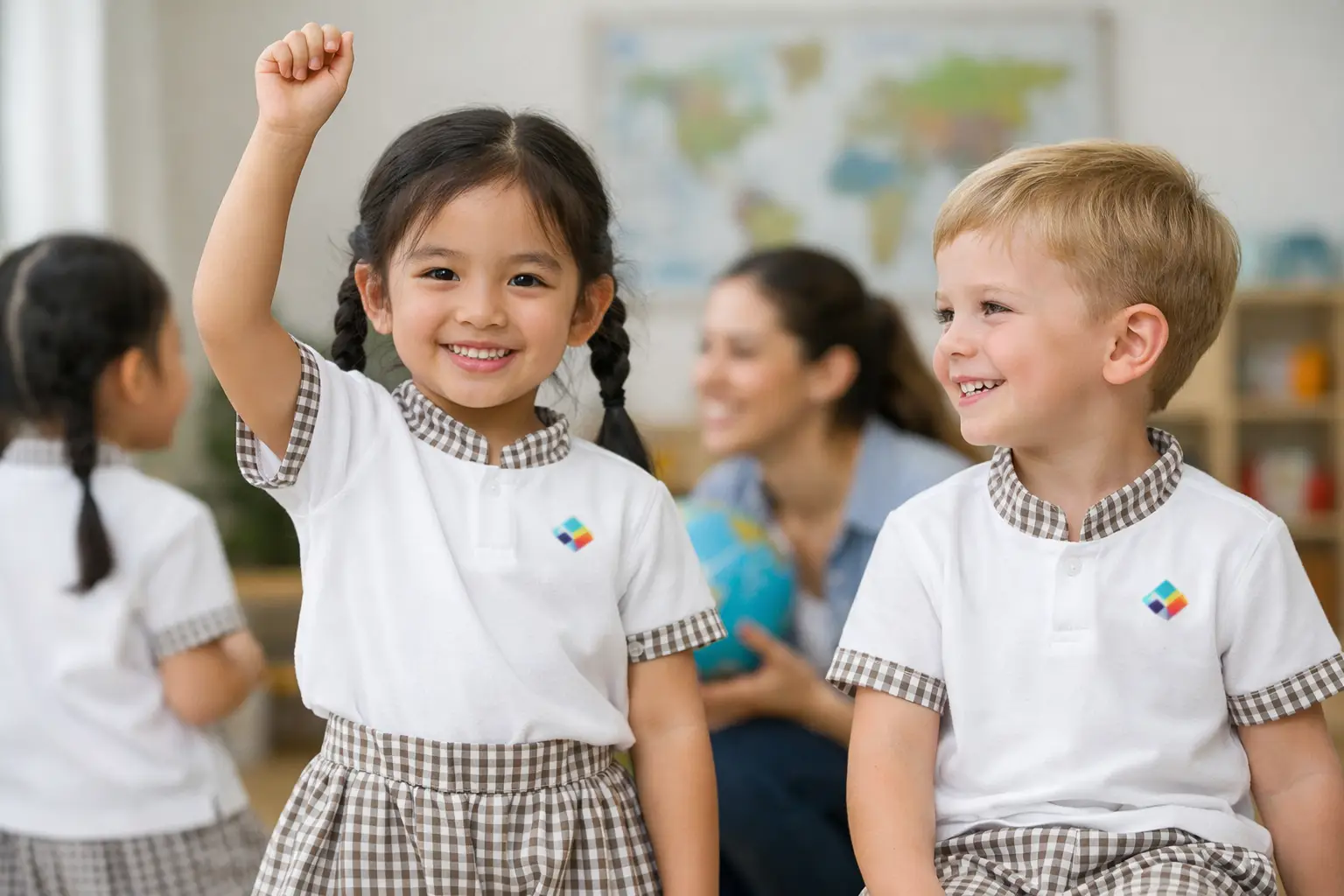
A child who can ask for help, express a feeling, or join a group with ease often appears naturally confident. In reality, that confidence is usually built through repeated, supportive experiences. That is exactly where how bilingual childcare supports confidence becomes so meaningful. When children are guided to communicate, understand, respond and connect in more than one language, they are not simply learning new words. They are developing trust in their own voice.
For parents choosing early childhood education, this matters. Confidence is not a soft extra. It shapes how children participate, how they approach challenge, and how ready they are to learn. In a strong bilingual childcare environment, confidence grows alongside language, social awareness, memory, attention and self-expression.
Why confidence begins with communication
Young children feel more secure when they can make themselves understood. If a child can say what they need, answer a question, greet a teacher, or describe an idea, they are more likely to take part in daily learning. They are also less likely to withdraw when routines change or social situations feel unfamiliar.
This is one of the clearest ways bilingual childcare supports confidence. Children are given structured opportunities to listen carefully, respond meaningfully and build vocabulary across different contexts. They learn that communication is something they can practise and improve, not something to fear.
That said, confidence does not come from pressure. It comes from the right level of support. In a well-designed bilingual programme, children are not expected to perform perfectly in two languages from the start. They are encouraged to participate through songs, stories, visual prompts, gestures, role play and conversation. These experiences reduce anxiety and help children feel capable.
How bilingual childcare supports confidence in everyday moments
Confidence in early childhood is usually built in ordinary parts of the day. Circle time, meal time, transitions, music, movement and play all create chances for children to use language with purpose.
A child who learns to greet teachers in two languages begins to understand social interaction as something manageable. A child who follows instructions during a hands-on activity starts to trust their ability to listen and respond. A child who sings, recites, or speaks in front of peers with support begins to feel seen and successful.
These moments matter because they create a pattern. Children learn, “I can try. I can understand. I can contribute.” Over time, this repeated sense of success becomes confidence.
There is also a deeper developmental benefit. Bilingual learners often become more attentive to sounds, patterns and meaning. They learn to notice differences, switch between language cues, and think more carefully before responding. This can strengthen mental flexibility, which supports confidence when children face something unfamiliar. Instead of becoming easily unsettled, they are more likely to adapt.
Confidence grows when children feel understood
One concern some parents have is whether learning two languages at a young age might confuse a child or slow speech. In practice, children can absolutely thrive in a bilingual setting when teaching is intentional and age-appropriate. Progress may not always look linear, and some children will mix languages or go through quieter phases. That is not usually a sign of failure. It is often part of the learning process.
What matters is the emotional environment around the child. If adults respond warmly, model language clearly and celebrate effort, children feel safe enough to keep trying. That safety is essential. A child who feels corrected too often may become hesitant. A child who is encouraged to communicate in different ways becomes more willing to speak, participate and take healthy risks.
This is why the best bilingual childcare settings do more than expose children to another language. They create responsive relationships. Teachers observe carefully, give children time to answer, and support understanding before expecting output. Confidence grows because the child feels capable, not judged.
The link between bilingual learning and social confidence
For young children, confidence is not only about speaking. It is also about belonging. A bilingual environment can support this by helping children connect with a wider range of people, routines and cultural references.
In diverse communities such as Singapore, this can be especially valuable. Children often grow up hearing multiple languages across home life, school and the wider community. When childcare reflects that reality thoughtfully, children are more likely to feel that their experiences make sense. Their home language and school language do not need to compete. They can both have a place in the child’s world.
This can strengthen social ease. Children who are comfortable hearing and using more than one language may feel less intimidated by new classmates, adults or settings. They become familiar with difference rather than threatened by it. That does not mean every bilingual child is instantly outgoing. Temperament still matters. Some children are naturally more reserved. But even quieter children can develop quiet confidence – the steady ability to engage, observe, understand and join in when ready.
School readiness is part of the confidence story
Parents often think about confidence in emotional terms, but academic readiness plays a role too. Children feel more assured when they can follow routines, understand instructions and participate in structured learning.
A quality bilingual childcare programme can support this through purposeful language development, guided interaction and enriched learning experiences. Storytelling builds vocabulary and comprehension. Music strengthens auditory memory and listening skills. Movement activities help children respond to cues and develop body awareness. Hands-on exploration gives children the language of curiosity – words for describing, predicting, comparing and asking questions.
When these elements are combined well, children begin school with more than exposure to two languages. They arrive with stronger habits of attention, communication and participation. That foundation often supports classroom confidence because the child is used to listening, responding, taking turns and expressing ideas.
At A2E Kids, this whole-child approach is especially relevant because bilingual development sits within a broader developmental framework that includes music enrichment, exploratory learning and communication growth. For many children, confidence rises fastest when language learning is woven into meaningful experiences rather than taught in isolation.
What parents should look for in a bilingual childcare programme
Not every bilingual setting supports confidence in the same way. The difference often lies in pedagogy, not marketing. A strong programme should offer consistent language exposure, warm teacher-child interaction and routines that encourage participation without overwhelming the child.
It also helps when bilingual learning is supported through multiple domains. Music, stories, imaginative play, sensory activities and guided discussion give children different entry points into language. Some children speak readily. Others build confidence first through rhythm, repetition, movement or one-to-one interaction. A thoughtful programme recognises these differences.
Parents should also look for signs that the setting values development over display. A confident child is not simply one who can recite loudly on cue. True confidence is seen in everyday independence, willingness to try, resilience after mistakes and comfort in communication.
There can be trade-offs to consider. Some children adapt quickly to bilingual routines, while others need more time. A child may be expressive in one language before the other. Another may understand far more than they say. This is why patience matters. Confidence built steadily is often more secure than confidence forced too early.
The long-term value of early confidence
When children feel confident, they are more likely to ask questions, attempt new tasks and recover from small setbacks. These behaviours support learning far beyond the preschool years. They also influence relationships, self-regulation and motivation.
Bilingual childcare can contribute to this long-term value because it gives children repeated practice in doing something challenging and succeeding at it. They learn to listen closely, try unfamiliar words, switch between contexts and make meaning with support. Each success, however small, tells the child that growth is possible.
That message stays with them. It shapes how they see themselves as learners and communicators. For families who want more than supervision – who want purposeful early education that strengthens communication, creativity, attention and self-belief – this is one of the strongest reasons to choose a developmental bilingual programme.
Confidence does not appear all at once. It is built word by word, interaction by interaction, in a place where children feel secure enough to speak, explore and grow into themselves.
Leave a Reply