A child who seems not to listen is often communicating something important: the instruction was too long, the environment was too busy, they were deeply engaged in play, or they needed help to regulate before they could respond. Learning how to promote child listening is therefore not about expecting instant obedience. It is about building attention, understanding, trust and the confidence to communicate.
For young children, listening is an active developmental skill. They must notice sounds, filter distractions, understand language, remember what was said and decide how to respond. These abilities grow gradually through warm relationships, repeated routines and meaningful experiences. When adults make listening feel safe, interesting and achievable, children are more likely to carry the skill into friendships, learning and family life.
How to Promote Child Listening Without Turning Every Moment Into a Demand
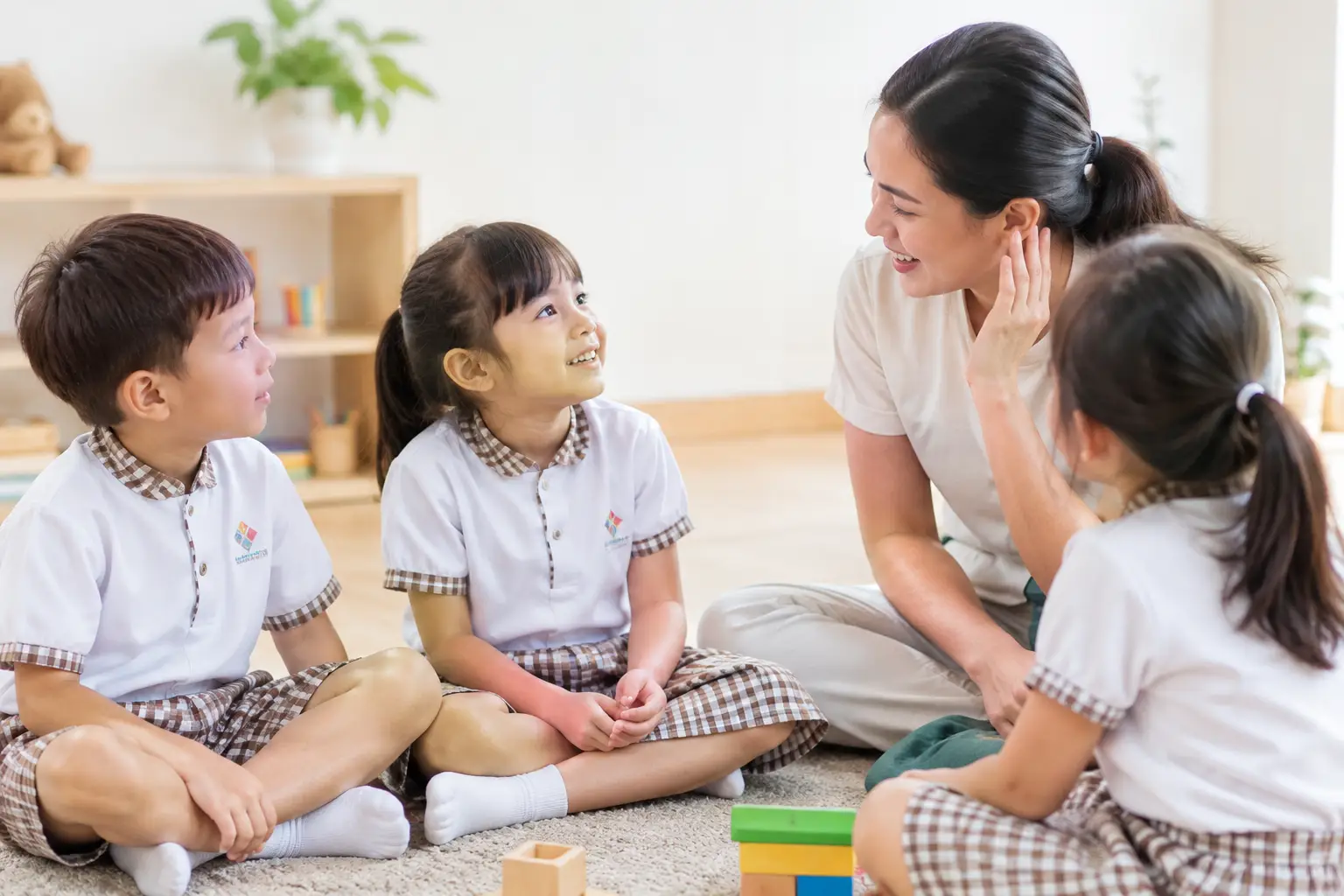
The most effective starting point is connection. Before giving an instruction, move close to your child, come down to their eye level and gently use their name. A calm touch on the shoulder can help if your child welcomes it. This small pause tells them that a conversation is about to begin, particularly when they are absorbed in building blocks, drawing or imaginative play.
Then keep the message short. “Shoes on, please” is easier for a preschooler to process than “We are going to be late, so stop what you are doing, find your shoes and put them on now.” Once the first instruction has been completed, give the next one. Breaking a task into manageable steps protects a child from feeling overwhelmed and gives them a real chance to succeed.
Tone matters as much as wording. A raised voice may gain attention in the moment, but it can also make a child anxious, defensive or more likely to tune out. Use a warm, clear and steady voice wherever possible. Firm boundaries still matter, especially around safety, but children listen more readily when they feel guided rather than continually corrected.
It also helps to allow processing time. After speaking, wait for five to ten seconds before repeating yourself. Young children may need longer than adults expect to shift attention and make sense of language. Repeating an instruction immediately, or adding several more words, can accidentally make it harder for them to respond.
Make Listening a Two-Way Skill
Children learn what listening looks like by experiencing it. When your child tells you about a playground disagreement or an elaborate story about a dinosaur, pause and give them your attention. Reflect their meaning back: “You felt upset because you wanted a turn.” This shows that words have value and that listening helps people understand one another.
Open questions can extend this exchange. Instead of asking only, “Did you have a good day?”, try “What made you laugh today?” or “What was the trickiest part of your game?” There is no need to turn every conversation into a lesson. The aim is to create regular moments in which your child practises listening, taking turns and adding to an idea.
If a child interrupts, acknowledge their eagerness while holding the boundary kindly. You might say, “I can see you have something to tell me. Please wait until I finish this sentence, then it is your turn.” This teaches conversational timing without suggesting that their thoughts do not matter.
Use Play, Stories and Music to Build Attention
Listening develops best when it is enjoyable. Play removes the pressure of getting an answer right and gives children a reason to focus. Try simple sound games during everyday routines. Ask, “Can you hear the fan?” or “Which sound is louder: the running water or the door closing?” These moments develop auditory awareness, the ability to notice and distinguish sounds.
Stories are equally valuable. Choose books with repeated phrases and invite your child to join in. Pause before a familiar word, then let them supply it. As their confidence grows, ask them to predict what may happen next or retell one part of the story in their own words. This supports listening comprehension, memory and expressive language at the same time.
Music offers a particularly natural route into focused listening. Clapping a simple rhythm for your child to copy, singing call-and-response songs, or moving fast and slowly to music all require children to attend, remember and respond. Repetition gives them a secure pattern to follow, while changes in pace, volume and rhythm gently stretch their concentration.
At A2E Kids, music education is used purposefully to support memory, focus, attention span and communication. Auditory mnemonics, rhythm and instrumental learning can help children connect what they hear with actions and ideas. The benefit is not that every child must perform perfectly. It is that music gives each child a joyful, structured way to practise sustained attention and listening.
Create Routines That Reduce Repeated Reminders
Children listen more easily when they know what is coming next. Predictable routines reduce the amount of verbal instruction needed throughout the day. A simple visual sequence for morning preparation, mealtimes or bedtime can be especially helpful for younger children. Pictures of washing hands, putting toys away and choosing a book give children a clear reference point even before their language is fully developed.
Use the same brief phrases for recurring moments. “First tidy, then story” is clearer than a long negotiation about why toys need to be put away. This is not about being rigid. There will be days when a child is tired, hungry, unwell or struggling with a transition. On those days, offer more support and lower the demand where you can.
Choices can prevent unnecessary power struggles while still keeping the adult in charge of the boundary. “Would you like to walk to the bathroom or hop like a rabbit?” gives a child agency, but both choices lead towards the same next step. When they cooperate, describe the specific behaviour you noticed: “You listened when I said it was time to wash hands, and you came straight away.” Specific encouragement helps children understand what they did well.
Notice What May Be Getting in the Way
A child’s difficulty listening is not always a behaviour issue. Hunger, fatigue, noise, screen stimulation, worry and a busy room can all affect attention. Some children also find it harder to process spoken information, particularly in group settings. They may need an adult to face them, shorter sentences, visual support or a quieter space before they can respond successfully.
Observe the pattern rather than focusing on one difficult moment. Does your child listen well during a calm bedtime story but struggle in a crowded restaurant? Do they follow one-step instructions but become lost when there are several? These observations can guide practical adjustments at home and allow parents and educators to support the child consistently.
If you have ongoing concerns about hearing, speech, language understanding or attention, speak with your child’s doctor or an appropriate early childhood professional. Seeking guidance is not a label or a failure. It is a thoughtful way to understand what support will help your child participate with greater ease and confidence.
Keep Expectations Developmentally Realistic
An infant may turn towards a familiar voice or pause at a sound. A toddler may follow a simple instruction when it is paired with a gesture. Preschool children can usually manage more complex directions, although they will still need reminders when excited or tired. Expecting a young child to listen like an older child can create frustration for everyone.
Progress often appears in small moments: your child waits for the end of a sentence, follows a new instruction, remembers a song sequence or tells you what they heard in a story. Notice these gains. They show that listening is becoming part of your child’s growing ability to think, connect and communicate.
Offer your child your calm attention, clear language and plenty of chances to listen through play. Over time, those everyday exchanges can become the foundation for a child who not only hears words, but feels ready to understand and respond to the world around them.
Leave a Reply