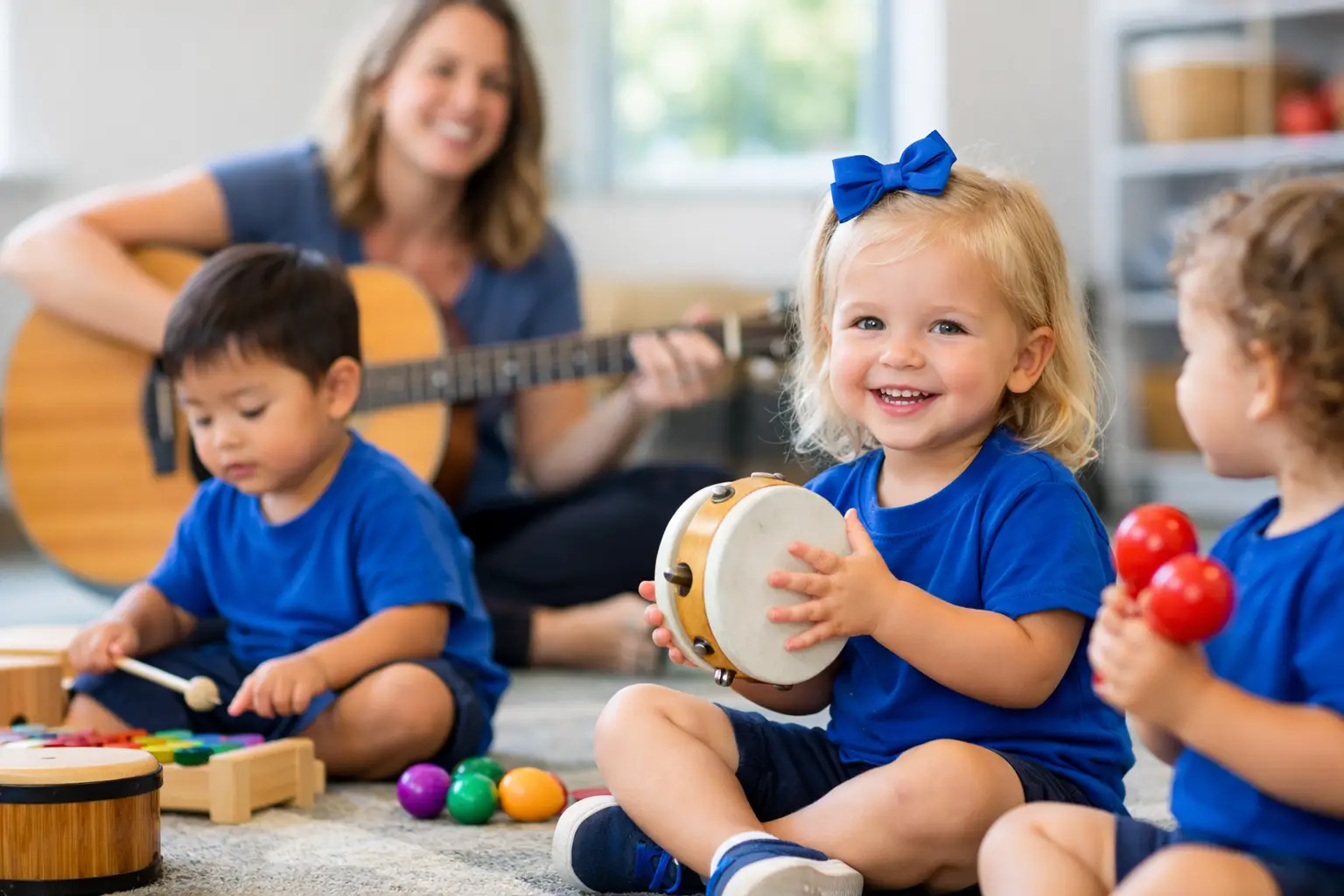
At this age, progress rarely looks dramatic. It looks like a child clapping in time for the first time, waiting for a turn with an instrument, or remembering the words to a familiar song and beaming with pride. That is why music classes for toddlers can be so valuable. When they are thoughtfully planned, they do far more than fill an hour with singing. They support communication, coordination, attention, memory and confidence in ways that are both joyful and developmentally meaningful.
For many parents, the question is not whether music is good for young children. It is whether a class will genuinely support development or simply provide entertainment. The difference matters. A well-designed early music experience can strengthen several areas of growth at once, while still feeling playful and warm.
Why music classes for toddlers matter in early development
Toddlers learn through repetition, movement, sound and relationship. Music brings all four together. A simple action song asks a child to listen, process language, connect words with movement and respond in sequence. A rhythm game invites them to focus, anticipate and regulate their bodies. Even the act of pausing before a chorus teaches waiting, prediction and self-control.
This is especially helpful during the toddler years, when children are building the foundations for later learning. Before a child is ready for formal academic tasks, they are learning how to attend, imitate, remember, express themselves and participate with others. Music gives these skills a natural home.
There is also a strong communication benefit. Songs slow language down into patterns that are easier to hear and remember. Repeated lyrics support vocabulary. Rhyme builds sound awareness. Call-and-response activities encourage children to listen and reply. For toddlers who are still finding their words, music often becomes a bridge to speech.
Then there is the emotional side. Music can help young children feel secure in a group, especially when routines are consistent. A familiar hello song, tidy-up tune or goodbye verse creates predictability. That predictability can reduce anxiety and help children join in with greater confidence.
What good toddler music classes should include
Not every programme offers the same developmental value. Some are energetic and enjoyable but lack structure. Others are highly structured but do not leave enough room for curiosity and movement. The strongest classes usually balance both.
A good session should feel purposeful without becoming rigid. Toddlers need opportunities to sing, move, listen, explore instruments and interact with an adult who responds warmly to their pace. If a class expects long periods of sitting still, it may not be well matched to this age group. Equally, if there is no clear routine, some children may struggle to settle and engage.
Look for classes that use repetition well. Young children do not tire of repetition in the way adults do. Repeating songs across weeks helps toddlers build memory, confidence and participation. You want to see children gradually becoming more familiar with actions, anticipating patterns and taking a more active role.
It also helps when activities support more than one domain of development. For example, tapping a beat on a drum is not only musical. It can support motor planning, bilateral coordination and focus. Singing while using gestures can reinforce comprehension and expressive language. In the best settings, music is not separated from development. It is one of the ways development happens.
The benefits parents often notice first
Parents are sometimes surprised by which changes appear earliest. It may not be musical skill in the formal sense. More often, they notice broader developmental shifts.
One common change is stronger attention. A toddler who usually flits quickly from one activity to another may begin staying engaged for longer when music is involved. This does not mean every child will suddenly sit through a full session without wriggling. Toddlers are meant to move. But a good class can gradually extend their ability to listen, wait and participate.
Another early benefit is confidence in communication. Some children begin singing fragments of songs at home before they are comfortable speaking in larger sentences. Others use actions from class to show understanding even before verbal language catches up. Parents may also notice improved imitation, clearer turn-taking and more willingness to join group routines.
Memory often strengthens too. Recalling lyrics, movements and musical patterns exercises working memory in a very child-friendly way. Over time, these experiences can support the broader skills children use in story recall, following instructions and early learning tasks.
How to choose the right music classes for toddlers
The best class depends on your child’s temperament, developmental stage and daily routine. A lively, highly social toddler may thrive in a busy group with lots of movement. A child who is more cautious may do better in a calmer environment with predictable routines and gentle guidance.
It is worth paying attention to the teaching approach. Ask whether the session is designed around early childhood development rather than performance. At toddler age, the goal is not polished musical output. It is participation, enjoyment and skill-building across communication, cognition, movement and social interaction.
You should also consider the adult leading the class. Subject knowledge matters, but so does understanding child development. A teacher who knows how toddlers learn will pace activities appropriately, welcome short attention spans without judgement and create a warm atmosphere where children feel safe to try.
Practical details matter as well. Class length should suit young children, usually shorter rather than longer. Group size can affect how much individual support a child receives. And if your child attends nursery or a full-day programme, integrated enrichment may be more beneficial than adding multiple separate activities to an already full week.
For families looking for a more comprehensive early learning environment, music can be especially powerful when it is woven into a broader developmental programme rather than treated as a stand-alone extra. In settings such as A2E Kids, music sits alongside bilingual learning, communication development, active kinaesthetic experiences and structured child development goals. That kind of integration can create more consistent gains because children revisit similar skills across different parts of the day.
When music classes may not be the right fit
Music is highly beneficial, but there are still trade-offs to consider. Some toddlers find group settings overwhelming, particularly if the room is noisy or fast-paced. Others may need more one-to-one support before they are ready to participate comfortably in a class.
This does not mean music should be removed. It may simply mean the format needs adjusting. A smaller group, a quieter teacher, or music built into a familiar childcare environment may work better than a weekend session in an unfamiliar space.
It is also helpful to keep expectations realistic. Music classes can support development, but they are not a shortcut or a guarantee of rapid progress. Growth at this age is uneven. One child may show quick changes in language, another in confidence, another in attention. What matters most is whether your child is engaged, secure and gradually building new skills over time.
Supporting musical development at home
A class is valuable, but everyday moments at home matter too. You do not need specialist training or a shelf full of instruments. Singing during tidy-up time, clapping syllables in your child’s name, or using simple action songs while getting dressed can reinforce the same developmental benefits.
Keep it consistent and low-pressure. Toddlers learn best when adults join in with warmth rather than correction. If your child sings only one line repeatedly, that still counts as learning. If they bang enthusiastically rather than keeping a steady beat, they are still exploring sound, cause and effect, and physical control.
Music also works well as part of routine. A song before bath time or a calm tune before sleep can help children transition more smoothly from one part of the day to another. Over time, these rituals build security as well as musical familiarity.
Looking beyond entertainment
The strongest toddler music experiences do not ask children to perform for adults. They invite children to listen, move, express, remember and connect. That is where the real value lies. Music becomes a tool for whole-child growth, supporting not just creativity but also communication, focus, coordination and emotional security.
When you choose music with purpose, you are not simply filling your child’s schedule. You are giving them another language for learning, another way to build confidence, and another opportunity to grow in a setting that feels joyful. For toddlers, that combination of nurture and structure can make all the difference.
Leave a Reply