The morning can unravel over something as small as the “wrong” cup. A toddler who seemed cheerful moments earlier may suddenly cry, refuse breakfast or cling tightly at drop-off. These moments are not usually about the cup alone. They often reflect a child trying to make sense of what happens next. Why do toddlers need routines? Because a familiar rhythm makes a big, fast-changing world feel understandable, safe and manageable.
For young children, routine is not simply a timetable. It is a series of repeated, caring experiences: washing hands before meals, hearing a familiar song at tidy-up time, placing shoes in the same spot, or knowing that a parent will return after school. These small patterns support emotional security while quietly building the foundations for independence, communication and learning.
Why do toddlers need routines in the early years?
Toddlers are developing rapidly, but they do not yet have the language, emotional control or sense of time that adults rely on. They experience the day through immediate events. When transitions arrive without warning – leaving the playground, stopping a favourite activity, getting dressed – they can feel abrupt and overwhelming.
A predictable sequence gives children useful clues. Breakfast is followed by getting ready. A goodbye ritual is followed by a day of play and learning. Lunch comes before rest. When the pattern repeats, children begin to anticipate it. Anticipation reduces uncertainty, and less uncertainty often means fewer power struggles.
This does not mean every day must run to the minute. Toddlers need room for spontaneous play, extra cuddles after a difficult night and changes that family life inevitably brings. The value lies in having dependable anchors, rather than enforcing a rigid schedule. A child can cope with an occasional late dinner or an unexpected outing when the wider rhythm of care feels steady.
Routines support emotional security and confidence
A toddler’s confidence grows through repeated evidence that adults are dependable. When a caregiver follows through on a familiar bedtime sequence or calmly explains the next step before leaving home, the child learns: “I know this. I am safe. I can do this.”
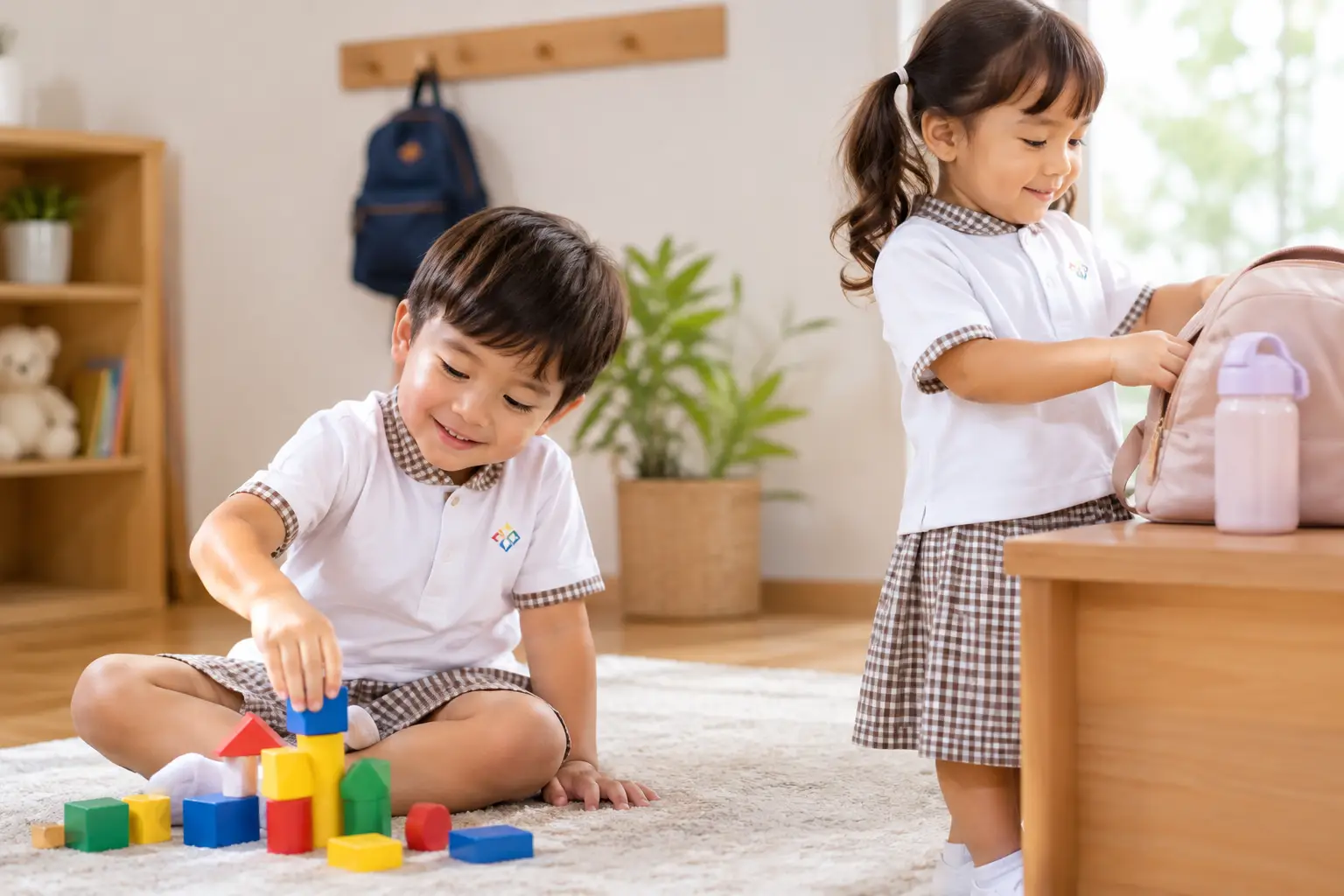
This is especially meaningful during separation. A consistent arrival routine at an early childhood centre might include greeting a trusted educator, putting a bag away and choosing a settling activity. It gives the child an active role instead of leaving them to face a large emotional transition all at once. Over time, that repeated experience can make drop-offs gentler and help children enter the day with greater confidence.
Routines also help toddlers practise managing strong feelings. A child may still be disappointed when playtime ends, but a familiar warning such as “two more turns, then we pack away” makes the boundary easier to understand. The adult is not removing joy without explanation; they are helping the child move from one meaningful part of the day to another.
Predictability makes learning easier
Young children learn best when they can give attention to the experience in front of them. If they are constantly trying to work out what is happening, their mental energy is pulled towards uncertainty. Familiar routines free up some of that energy for listening, remembering, experimenting and joining in.
Consider a regular story session. At first, a toddler may simply enjoy sitting close to an adult. With repetition, they begin to recognise the opening phrase, point to favourite pictures, supply the last word of a repeated sentence and talk about what happened. The routine creates a secure frame for language development.
The same principle applies to music and movement. A familiar welcome song, beat pattern or action rhyme invites participation because the child knows what to expect. Repetition is not dull for toddlers. It is how they notice patterns, strengthen memory and gain the confidence to contribute. Once a child is comfortable with a familiar activity, educators can introduce a new word, rhythm, question or challenge without making the whole experience feel unfamiliar.
At A2E Kids, purposeful daily rhythms can support whole-child development through bilingual communication, exploratory learning, active movement and music experiences. Structure gives children a reliable base from which to be curious, creative and fully engaged.
Everyday routines build independence
Many of the most valuable toddler lessons happen in ordinary moments. Washing hands, helping to pack away toys, putting a cup on the table and attempting to put on sandals all develop self-help skills. These tasks take longer than doing everything for a child, particularly on a busy weekday morning. Yet allowing a few extra minutes for participation can be an investment in capability.
A routine turns these moments into achievable expectations. Instead of repeatedly instructing a child through every step, parents can use the same simple sequence: “Shoes on, bag ready, then we go.” Visual cues, such as a low hook for a bag or a picture showing the bedtime order, can be helpful for children who are still developing verbal language.
The goal is not perfection. A two-year-old may put shoes on the wrong feet or spill while pouring water. What matters is the message beneath the practice: “You are learning to care for yourself, and I am here to guide you.” This balance of support and responsibility nurtures resilience.
A routine can strengthen communication
Repeated moments give toddlers many reasons to use language. At mealtimes, they hear and practise words for food, quantity and choice. During tidy-up, they learn action words such as “put”, “carry”, “open” and “close”. Before bed, a familiar conversation about the day encourages them to recall experiences and express feelings.
For bilingual families, routine can be particularly useful. One language may be used consistently for certain songs, greetings or care moments, while the other is naturally woven into different parts of the day. There is no need to turn every interaction into a lesson. Warm, repeated language in meaningful contexts is far more valuable than pressure to perform.
Structure helps toddlers learn social skills
Group routines show children how to belong. Waiting briefly for a turn, joining a greeting song, serving themselves at snack time and helping to return materials all introduce the idea that other people have needs too. These are early lessons in cooperation, empathy and respect.
Toddlers will not always manage these expectations calmly. They may grab, protest or wander away. That is developmentally normal. The adult’s role is to repeat the routine with patient guidance, using clear and consistent language. Over time, the child begins to connect the cue with the expected action.
A well-planned early learning environment uses routines as teaching opportunities, not merely as ways to keep a group quiet. Children can count cups while preparing for lunch, notice whose turn comes next, sing while moving between activities and make simple choices within a clear boundary. The rhythm remains predictable, but the learning inside it stays rich.
How to create routines without making family life rigid
Start with the parts of the day that tend to feel hardest: waking, leaving home, meals, returning from childcare and bedtime. Choose one or two small sequences to make more consistent rather than attempting a complete overhaul. A calm bedtime rhythm of bath, pyjamas, two books and a cuddle is easier to sustain than an elaborate plan that no one can maintain.
Give transitions notice. Toddlers respond better when they can prepare: “After this song, we are going to wash hands.” A timer, a familiar tidy-up song or a simple first-then phrase can make the change more concrete. Keep directions short and offer limited choices where possible, such as choosing between two tops or deciding which book comes first.
It also helps to protect connection within the routine. A rushed schedule may be predictable but still feel stressful. A few minutes to reconnect after a full day – perhaps through a snack, a short walk or shared play on the floor – can help a toddler settle before the evening tasks begin.
There will be days when routines fall apart due to illness, travel, visitors or sheer exhaustion. On those days, return to the most reassuring anchors: a familiar meal, a favourite song, a predictable goodnight phrase or a calm explanation of what is different. Flexibility does not weaken routine. It teaches children that change can happen within the safety of caring relationships.
The most effective routines are not the most complicated ones. They are the ones your child can recognise, participate in and trust – small daily promises that say, again and again, “You are safe, you are capable, and there is a place for you in this day.”
Leave a Reply