
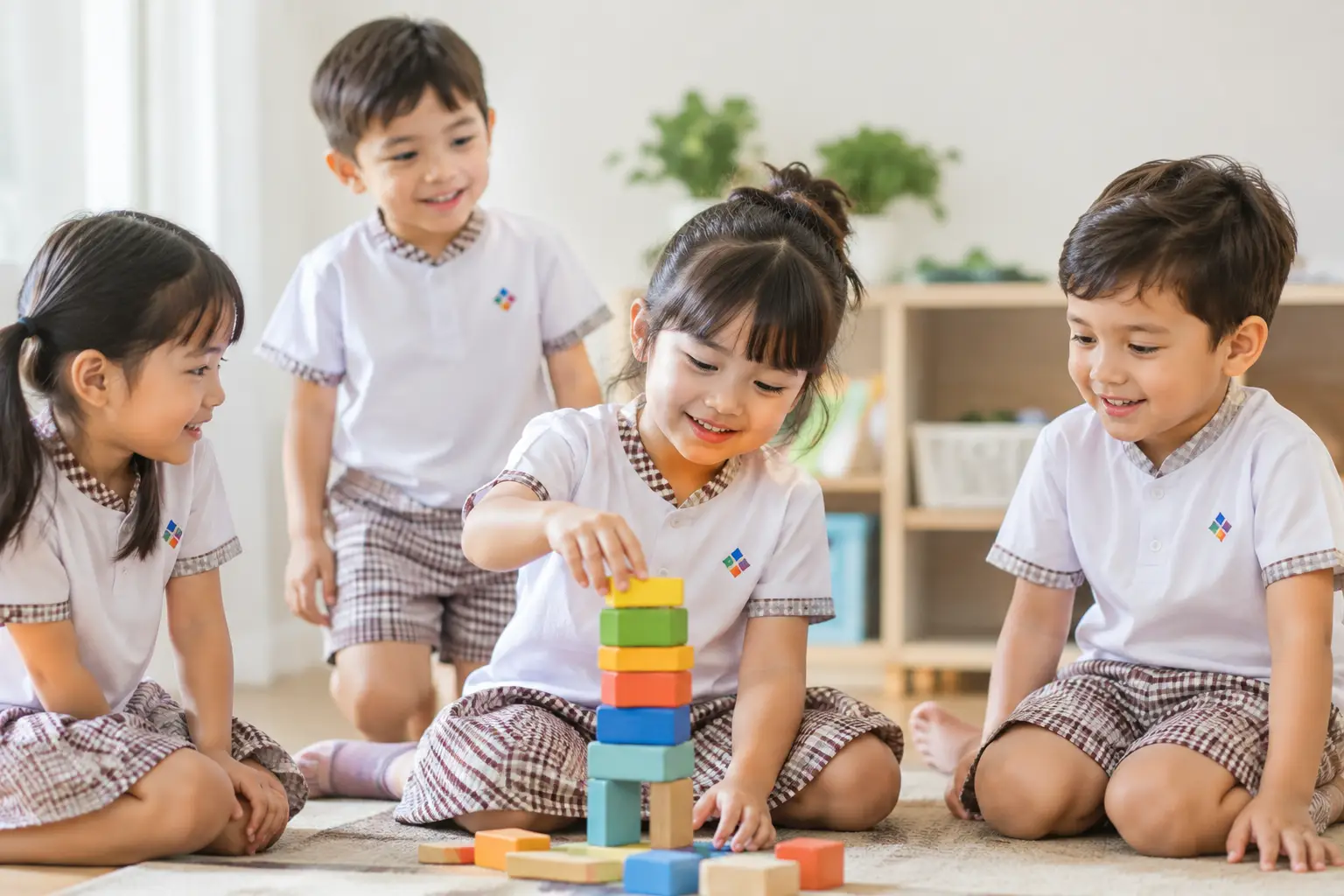
A tower falls just before your child finishes it. Their turn at a favourite activity is delayed. They cannot fasten a button as quickly as they hoped. These small moments can feel enormous to a preschooler, but they are also where meaningful growth begins. Learning how to encourage preschool resilience is not about asking children to stop crying, be brave all the time, or cope alone. It is about helping them feel safe enough to try again.
Resilience is a child’s growing ability to recover from disappointment, adapt to change, manage big feelings and keep participating after something feels difficult. In the preschool years, it develops through hundreds of everyday interactions with trusted adults. Your calm presence, the words you choose and the opportunities you provide all shape a child’s confidence in facing the next challenge.
What preschool resilience looks like
A resilient preschooler is not necessarily quiet, independent or always cheerful. They may still cry when a parent leaves for work, feel cross when they lose a game, or need a cuddle after a mistake. The difference is that, with support, they gradually learn to settle, communicate what happened and re-engage with the task or group.
You may notice resilience when your child asks for help rather than giving up, has another go at a puzzle, accepts that plans have changed, or says sorry after hurting a friend. These are significant early social-emotional skills. They support not only school readiness, but also communication, friendships, attention and a lifelong willingness to learn.
Children develop at different rates. A confident speaker may find separation difficult, while a child who manages routines independently may need more help joining group play. Resilience is not a fixed personality trait. It grows when expectations are realistic and support is consistent.
How to encourage preschool resilience without rushing feelings
The most effective approach begins with connection. When a child feels understood, their nervous system can settle and they are better able to think, listen and try again. This does not mean removing every frustration. It means staying close enough to help them move through it.
Name the feeling, then hold the boundary
When a child is overwhelmed, lengthy explanations rarely help. Use simple, accurate language: “You are disappointed because it is time to pack away.” “You wanted to do it by yourself and that feels frustrating.” Naming the emotion gives children the language to recognise it later.
Then keep the boundary calm and clear. “It is still time to pack away. I will help you start.” This balance matters. If adults immediately give in to avoid tears, children may miss the chance to discover that difficult feelings can pass. If adults dismiss tears or insist that a child should not feel upset, the child may feel alone with those feelings.
Avoid labelling a child as “shy”, “naughty” or “a cry-baby”. Labels can become a story children tell themselves. Describe what you see instead: “You are taking time to warm up,” or “You are having a hard moment.” It communicates that behaviour and feelings can change.
Let children do manageable hard things
Resilience needs practice. Choose small challenges that sit just beyond what your child can comfortably do alone, such as putting on socks, carrying their own water bottle, serving food, tidying resources or speaking to an unfamiliar adult with you nearby.
Offer help in stages rather than taking over. You might say, “You start the zip and I will hold the jacket,” before gradually stepping back. The goal is not perfect independence at once. It is for children to experience effort, support and progress.
Praise the process with specific language. Instead of only saying “Good job”, try: “You kept turning the puzzle pieces until one fitted,” or “You took a breath and tried again after the block tower fell.” This directs attention towards persistence, problem-solving and self-regulation rather than praise alone.
Build predictability, then introduce small changes
Reliable routines are powerful because they reduce unnecessary stress. A predictable morning sequence, a familiar goodbye ritual and regular sleep and mealtimes help preschoolers reserve their energy for learning and play. For busy families, even a short routine can be grounding: get dressed, have breakfast, choose a goodbye phrase, then leave.
At the same time, children need gentle experience of change. Try taking a different route to the park, asking them to use a different cup, or explaining that a planned outing is moving to another day because of rain. Acknowledge the disappointment and show what remains stable: “We cannot go to the playground today, but after lunch we can build an indoor obstacle course.”
This teaches flexibility without making a child’s day feel unpredictable. The right amount depends on temperament. A child who is already adjusting to a new class, sibling or home routine may need fewer extra changes for a while.
Use play to practise recovery and problem-solving
Play gives preschoolers a low-pressure way to encounter challenge. Board games teach turn-taking and losing gracefully. Construction play invites children to rebuild after a collapse. Pretend play allows them to act out a visit to the doctor, a disagreement with a friend or the first day in a new setting.
Rather than solving every problem, ask a question that invites thinking: “What could we try next?” “Who could help?” “How might we make space for both of you?” Keep choices limited when a child is upset. Two possible next steps are easier to manage than an open-ended question.
Creative activities also make room for imperfection. A painting may not look as imagined; a rhythm may be difficult to follow at first. Music is especially valuable because children can practise listening, waiting, repeating and contributing to a group. Learning an instrument or joining a song gives them visible evidence that skill grows through regular, patient practice.
At A2E Kids, structured music enrichment, exploratory science and active kinaesthetic learning offer children purposeful opportunities to experiment, make mistakes and persevere within a supportive environment. The developmental value is not only in completing an activity. It is in learning that curiosity and effort can carry them forward.
Model the response you hope to see
Children observe adults closely, particularly when plans go wrong. You do not need to pretend that challenges are easy. Instead, model a steady response: “I have made a mistake. I feel frustrated, so I am going to pause and work out what to do.”
When you apologise after speaking sharply, you teach repair. When you calmly rearrange a disrupted plan, you teach flexibility. When you ask for help, you show that resilience includes seeking support rather than managing everything alone.
This is particularly relevant during hurried transitions. If mornings are difficult, prepare as much as possible the night before and use fewer words in the moment. A regulated adult is one of the strongest supports a preschool child can have.
Create language for social setbacks
Friendship challenges are a normal part of preschool life. Children are still learning to share attention, negotiate roles and understand another person’s perspective. Instead of telling a child simply to “be nice”, give them phrases they can use: “Can I have a turn when you are finished?” “I do not like that.” “Can we play together?”
After a difficult interaction, discuss it once everyone is calm. Start with what happened, not blame: “You both wanted the same scooter.” Then help your child consider choices for next time. They may need adult coaching for many repetitions before these skills become natural.
Do not expect children to handle every conflict alone. Adult intervention is appropriate when anyone is unsafe, repeatedly excluded or unable to regulate. Resilience is strengthened by responsive guidance, not by leaving children to navigate situations beyond their current skills.
Notice progress in small moments
Parents often look for dramatic signs of confidence, such as a child walking into class without tears or performing happily in front of others. Those moments can be wonderful, but quieter changes matter too. Perhaps your child now cries for five minutes instead of twenty, accepts help after refusing it before, or returns to play following a disagreement.
Reflect these changes back to them. “Last week you did not want to speak to the teacher. Today you said good morning.” This helps children build a realistic, encouraging picture of themselves as capable learners.
Resilience does not mean your child will never struggle. It means they will gradually know that feelings are manageable, adults can be trusted and another attempt is possible. Each patient response today becomes part of the inner voice they will carry into tomorrow’s challenges.
Leave a Reply