A puddle that changes colour, an orange that floats, a seed that begins to grow – these small moments can feel extraordinary to a preschooler. The best preschool science experiments are not about memorising facts or producing a perfect result. They give children permission to wonder, test an idea, describe what they notice and try again.
For young children, science is most meaningful when it is hands-on, sensory and connected to everyday life. A few minutes of purposeful exploration can strengthen attention, vocabulary, problem-solving and confidence. The adult’s role is not to supply every answer, but to create a safe setting and ask thoughtful questions.
What makes preschool science meaningful?
A worthwhile experiment should be simple enough for a child to take an active role. They may pour, stir, sort, squeeze, predict or observe, while an adult handles anything hot, sharp or difficult to measure. The best activities also have a visible change: ice melts, colours travel, bubbles appear or an object sinks.
Try to use language that expands thinking without turning the activity into a test. Ask, “What do you think will happen?” before you begin, then follow with, “What changed?” and “Why do you think that happened?” If your child is growing up bilingually, name key words in both languages where appropriate. Words such as float, sink, dissolve, smooth, rough, heavy and light become much more memorable when children can see and feel what they mean.
12 best preschool science experiments for curious minds
1. Sink or float investigation
Fill a clear basin with water and collect a few safe household items, such as a cork, plastic spoon, coin, leaf, small ball and orange. Invite your child to predict which objects will sink and which will float before placing them in the water.
The surprise is often the orange. It floats with its peel on, even though it feels heavy. This is a gentle introduction to buoyancy, but the real learning lies in comparing, predicting and revising an idea. Keep towels nearby and supervise closely around water.
2. Walking water colours
Place three small cups in a row, with coloured water in the first and third cups. Leave the middle cup empty. Fold paper towels into strips, then place one end in each cup so the towels connect them.
Over time, the water travels through the paper towel and meets in the middle, creating a new colour. Children can practise patient observation while learning that water can move through tiny spaces. Use this opportunity to talk about colour mixing and ask which new colour they expect to see.
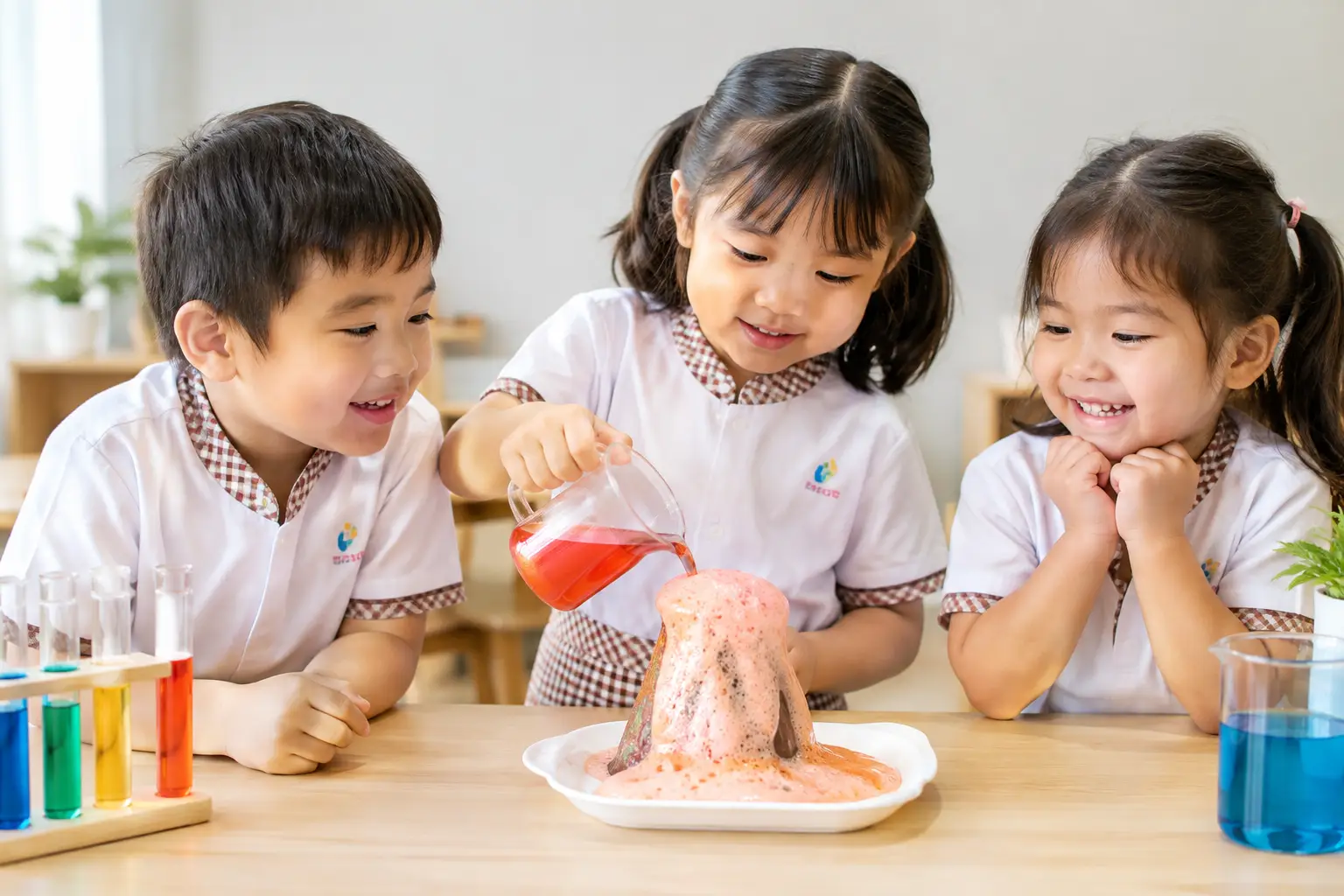
3. Fizzing citrus volcanoes
Cut an orange or lemon in half, loosen the segments with a spoon, then add a small spoonful of bicarbonate of soda. Let your child squeeze or pour a little lemon juice over it and watch the gentle fizz.
The reaction is exciting without requiring a large mess. It also engages the senses through scent, sound and movement. Explain simply that two ingredients have met and made gas bubbles. Avoid tasting the mixture, and guide younger children to keep it away from their eyes.
4. Ice rescue challenge
Freeze small, washable toys in an ice cube tray or shallow container. Place the ice on a tray and offer droppers, warm water, salt and child-safe spoons. Ask your child how they might rescue the toys.
Warm water melts ice quickly, while salt creates interesting channels and cracks. There is no need to explain every detail at once. Notice the evidence together: “This part feels slippery,” or “The salt made a little hole.” This activity builds persistence as well as scientific thinking.
5. Rainbow milk patterns
Pour a thin layer of full-fat milk into a shallow dish and add a few drops of food colouring. Touch the surface gently with a cotton bud dipped in washing-up liquid and observe the colours move.
The swirling patterns are captivating, but this experiment works best as an observation activity rather than a craft project. Explain that the soap interacts with the fat in the milk, pushing the colours around. Remind children that this is for looking, not drinking.
6. Seed growth in a clear bag
Place a damp paper towel and a few dried beans inside a clear zip bag. Tape it to a window where it receives indirect light, then check it together each day.
A clear bag lets children see the roots develop before the shoot emerges. Encourage them to draw what they notice every few days, even if the drawing is simply a line or a dot. Growing times vary, which makes this a valuable lesson in patience: living things do not follow a timetable just because we are eager to see results.
7. Shadow size exploration
On a sunny day, take a torch and a few toys to a clear wall or outdoor space. Move the torch nearer to and farther from each object. Let your child watch the shadow grow, shrink and change shape.
This playful activity supports spatial awareness and introduces the relationship between light and shadows. Try making animal-shaped shadows with hands, then invite your child to invent a story about what they see. Science and imaginative communication can grow beautifully together.
8. Magnetic treasure hunt
Use a child-safe magnet to test a selection of objects: a paper clip, wooden block, aluminium foil, coin, plastic lid and steel spoon. Sort the objects into two groups as your child discovers what the magnet attracts.
Preschoolers are often fascinated that a magnet can pull an object without touching it. Use the words magnetic and non-magnetic, but accept simple descriptions too. The purpose is to notice a pattern. Keep magnets away from mouths, and do not use small loose magnets with young children.
9. Pepper and soap surface tension test
Sprinkle a light dusting of black pepper over water in a shallow bowl. Touch the water with a clean finger first, then touch it with a finger that has a tiny amount of washing-up liquid on it.
The pepper quickly darts away from the soap. Children may describe it as “running away”, which is a perfectly useful starting point. You can explain that soap changes the water’s surface. This is a quick experiment with a dramatic effect, though it needs calm hands to prevent splashing.
10. Sound shakers and vibration
Fill identical sealed containers with different materials, such as rice, pasta, buttons or dried beans. Shake them one at a time and listen closely. Which sounds are loud, soft, high or low?
This activity connects science with musical awareness. Children learn that sound is created by movement and vibration, while also practising careful listening and descriptive language. At A2E Kids, purposeful music experiences are valued because attentive listening supports memory, focus, creativity and communication alongside musical enjoyment.
11. Nature texture detectives
During a walk in the park or garden, collect a few fallen leaves, smooth stones, seed pods and pieces of bark. Back indoors, examine them with a magnifying glass and sort them by texture, shape, size or colour.
There is no single correct way to sort. One child may group items by rough and smooth, while another notices what is long or round. This flexibility encourages children to explain their reasoning, an essential foundation for later scientific enquiry. Only collect safe, fallen items and wash hands afterwards.
12. Balloon static experiment
Rub a balloon gently on clean, dry hair or a woollen cloth, then hold it near tiny pieces of paper. The paper may jump towards the balloon or cling to it.
Static electricity can feel almost magical, especially when the balloon sticks briefly to a wall. Humid weather can make the effect less noticeable, so treat this as an experiment rather than a promised performance. If it does not work immediately, ask what else you could try: drier paper, a different cloth or more rubbing.
Help children think like scientists
Children do not need a worksheet to learn from an experiment. A short conversation is often more powerful. Before starting, invite a prediction. During the activity, help them notice details. Afterwards, encourage them to share what surprised them or what they would change next time.
Resist the urge to correct every explanation. If your child says a seed is “drinking” water, you can build on it: “Yes, the seed takes in water. What do you think it needs next?” This protects their confidence while gradually extending their vocabulary and reasoning.
Repetition matters too. A child who wants to make walking water three times is not merely repeating a craft. They are testing whether the same thing happens again, noticing differences and building focus through familiar routines.
Let curiosity lead the next question
Set aside a small tray with a magnifying glass, clear cups, spoons, droppers and a cloth for spills. When materials are accessible and expectations are calm, science becomes part of daily play rather than a special event that needs perfect preparation. Your child’s eager question, careful observation or delighted “Look!” is already the beginning of purposeful learning.
Leave a Reply