A toddler who cannot yet recall a long set of instructions may happily sing every word of a familiar song. That contrast is more than charming. It offers a useful clue for parents asking, can music improve memory? When music is used with purpose, it can give young children memorable patterns for language, routines and learning – while making the experience joyful and reassuring.
For infants and preschoolers, memory is still developing rapidly. They learn best through repeated, meaningful experiences involving the senses, movement, emotion and connection with trusted adults. Music can bring these elements together. A melody, beat or repeated lyric gives information a structure that is easier for a young mind to revisit.
Can Music Improve Memory? The Short Answer
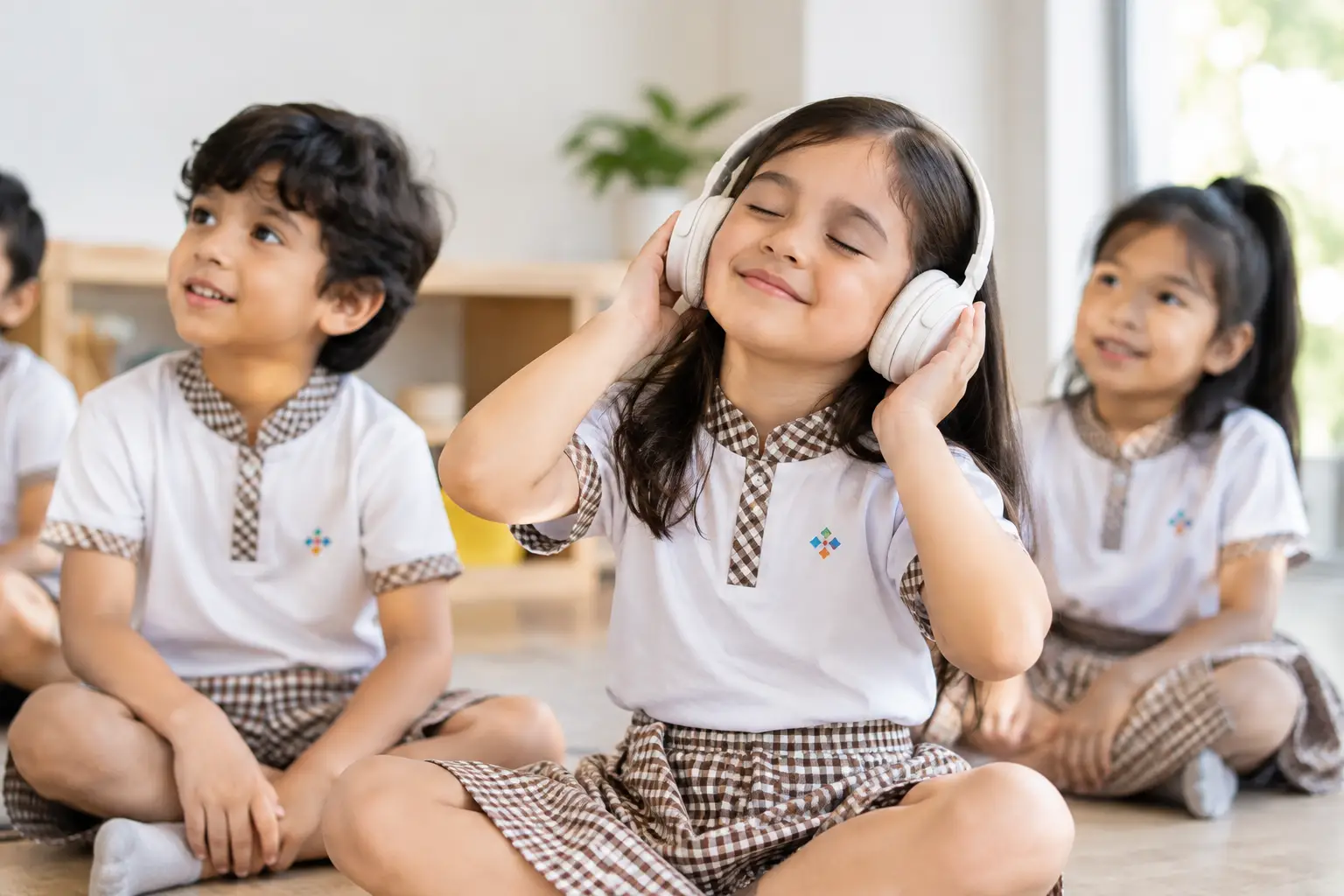
Music can support memory, particularly when children actively participate rather than only listen. Singing a song, clapping a rhythm, moving to a beat or playing a simple sequence on an instrument asks a child to listen, anticipate, repeat and respond. These are valuable foundations for remembering.
Music is not a shortcut that instantly makes every child remember more. A child’s sleep, well-being, language exposure, temperament and stage of development all matter. Nor does every type of music serve the same purpose. A busy song playing in the background may distract a child who is trying to concentrate, while a simple, familiar song connected to a clear activity may help them hold information in mind.
The greatest benefit comes when music is woven into responsive teaching. An educator notices what a child can manage, repeats material at an appropriate pace and allows time for the child to join in. This turns music from entertainment into a meaningful learning tool.
Why Rhythm and Melody Make Learning More Memorable
Young children are naturally drawn to patterns. A steady beat is predictable. A repeated chorus returns in the same place. Rhyming words create sound relationships that children begin to anticipate. These patterns can reduce the effort involved in recalling new information.
Think of how a handwashing song can guide a child through each step, or how a tidy-up chant can help a class remember what happens next. The music acts as a cue. Over time, the cue becomes linked with the action, helping the child retrieve the routine with greater independence.
Melody can also make language feel more accessible. When words are sung slowly and clearly, children can hear changes in sound, syllables and rhyme. This supports early listening skills, vocabulary development and phonological awareness – the ability to notice and work with the sounds within words. These are important building blocks for later reading and communication.
There is an emotional element, too. Children often remember experiences that make them feel safe, successful and connected. A familiar welcome song, sung with warm eye contact and gestures, can help a child settle into the day. That sense of security creates a stronger platform for attention and learning than pressure ever could.
Active music-making matters most
Passive listening has its place, especially for relaxation or shared enjoyment. However, active music-making generally places more demands on a child’s developing memory and attention. When children copy a clap pattern, wait for their turn to play a drum or remember the next action in an action song, they are practising several skills at once.
They must sustain attention, listen carefully, control their bodies and recall what comes next. These experiences strengthen executive-function skills, including working memory. Working memory is the mental space children use to hold a small amount of information while they act on it – such as remembering a two-step instruction or following the sequence of a game.
Using Auditory Mnemonics for Everyday Learning
An auditory mnemonic is a sound-based memory aid. It might be a song, rhyme, rhythm or repeated phrase that helps information stay organised in a child’s mind. The alphabet song is a familiar example, but auditory mnemonics can be much more purposeful than simply putting words to a tune.
For young children, the most effective mnemonics are short, clear and linked directly to an experience. A song about putting toys away should be sung while children are tidying. A rhythm for counting should be matched with real objects that children can touch and count. This connection helps children understand the meaning behind the words, rather than repeating them without comprehension.
At home, parents can use simple musical cues during predictable parts of the day. A gentle dressing rhyme can make morning routines calmer. A two-line song about washing hands can reinforce self-help skills. A familiar lullaby can become part of a comforting bedtime sequence. Consistency matters more than musical perfection. Your child does not need a polished performance – they need your voice, your attention and repeated opportunities to participate.
It also helps to pause. After singing a repeated line several times, leave out the final word and let your child complete it. Tap a short beat and invite them to copy it. Ask what action comes next in a familiar song. These small moments encourage recall without making learning feel like a test.
Music, Focus and Communication Are Closely Connected
Memory does not develop in isolation. Before a child can remember a new song or instruction, they need opportunities to listen and focus. Music provides a motivating setting in which to practise these early attention skills.
A child learning to play along with a beat is learning to notice timing. A child waiting for the next verse is practising anticipation and self-regulation. A child singing with peers is listening for a shared start and stop. Such experiences can support attention span and social awareness, especially when activities are brief, well-paced and suited to the child’s age.
Music also creates natural reasons to communicate. Some children who are hesitant to speak in a group may be more willing to join a repeated lyric, echo a sound or use a gesture within a song. This does not replace individual support for speech and language needs, but it can provide a welcoming bridge into expressive communication.
Bilingual learning can benefit from this same approach. Songs can introduce familiar words in each language through repetition, gesture and context. The aim should not be to rush children into memorising long vocabulary lists. It is to help them hear, understand and use meaningful language in a way that feels connected to daily life.
Choosing Music Experiences That Support Development
Not every music activity needs to be a formal lesson. The most valuable experiences are often simple, interactive and repeated. For young children, variety is helpful, but too much novelty can make it harder to build familiarity and recall.
Consider whether the activity has a clear developmental purpose. Is the child practising listening, vocabulary, turn-taking, coordination, emotional expression or a daily routine? A short activity with one clear objective is often more effective than a long session with many competing demands.
It is equally important to respect individual differences. Some children enjoy energetic drumming and movement, while others become overwhelmed by loud sounds or large-group activities. Offering quieter instruments, smaller groups, visual gestures and time to observe can help every child engage comfortably. Music should support well-being, not become another source of pressure.
At A2E Kids, structured music education, including violin and piano enrichment, is designed as part of a wider whole-child approach. Through purposeful auditory mnemonics, active participation and age-appropriate guidance, children can build memory, attention, communication and creative confidence alongside one another.
A simple musical routine to try
Choose one daily moment, such as packing away after play. Use the same short tune and a few clear words each time: “Blocks in the basket, books on the shelf.” Sing it together while completing the actions. After a week or two, pause before the final phrase and see whether your child can supply it or begin the task independently.
The goal is not perfect recall on the first attempt. It is the gradual growth of confidence: your child hears a cue, remembers a familiar pattern and realises, “I know what to do.” That quiet sense of capability is one of the most meaningful gifts purposeful music can offer.
Leave a Reply