A toddler who leaves a puzzle after two minutes is not necessarily distracted or behind. Young children are still learning how to direct their attention, return to a task and manage the many sights, sounds and feelings competing for their interest. The best ways to improve concentration begin with realistic expectations and a calm, consistent environment where attention can grow naturally.
For infants and preschoolers, concentration is not about sitting still for long periods. It is the ability to engage meaningfully with an activity, listen to a simple instruction, notice details, remember what comes next and keep trying when something feels challenging. These foundations support communication, confidence, self-help skills and later learning.
Concentration develops through relationships and routine
A child’s attention span changes quickly during the early years. A two-year-old may focus deeply on pouring water or arranging blocks, then move on within a few minutes. A five-year-old may stay with a story, construction project or music activity for much longer when it matches their interests and developmental stage.
Rather than asking, “Why can’t my child focus?”, it can be more helpful to ask, “What is making focus difficult right now?” Hunger, tiredness, an unfamiliar task, noise, worry or an activity that is either too easy or too demanding can all affect attention. Children borrow calm from the adults around them, so patient guidance matters as much as the activity itself.
Predictable routines also reduce the mental effort of working out what happens next. When meals, play, rest, reading and bedtime follow a familiar rhythm, children have more energy available for learning. This does not mean every minute must be scheduled. It means offering a secure pattern with room for child-led exploration.
Best ways to improve concentration through everyday play
Start with short, purposeful activities
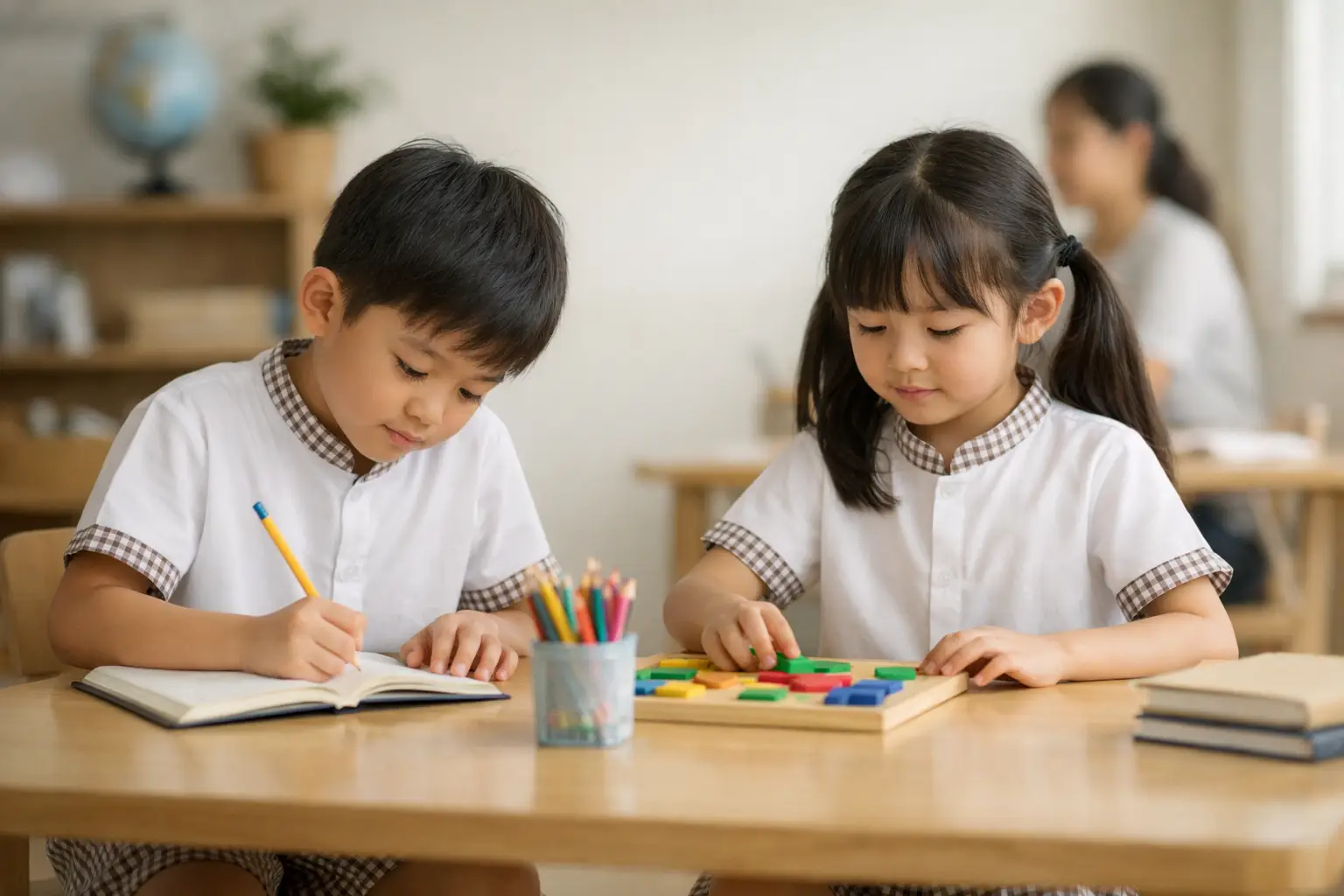
It is tempting to extend an activity when a child seems engaged, but stopping while they are still interested often protects their motivation for next time. Begin with a manageable goal: complete one simple puzzle, listen to one short story, sort a small group of objects or help set the table.
Then gradually increase the challenge. If your child can listen to a three-minute story with enjoyment, choose a slightly longer one another day. If they can build a tower of six blocks, invite them to make a taller structure or copy a simple pattern. Small successes teach children that sustained effort is possible.
Follow your child’s interests where you can. A child fascinated by vehicles may concentrate longer while matching vehicle pictures, washing toy cars or listening to a transport-themed story than during a generic worksheet. Interest is not a shortcut to learning – it is often the doorway to it.
Protect uninterrupted play
Deep concentration is often visible during open-ended play. A child mixing pretend soup, arranging animal figures or testing how a ramp works is making decisions, solving problems and returning attention to a self-chosen purpose.
Try to avoid interrupting simply to praise every step or ask lots of questions. Warmly observe, then join when invited. A specific comment such as, “You kept adjusting the blocks until the bridge stayed up,” recognises effort without taking control of the play.
At home, offering fewer toys at one time can be surprisingly effective. A crowded play area may encourage constant switching. Rotate a small selection of well-loved materials, including books, building resources, art materials and imaginative-play objects, so children can see what is available and settle into it.
Use movement before expecting stillness
Young children learn with their whole bodies. They may need to climb, dance, stretch, carry, balance and run before they are ready to attend to a book or table activity. Movement supports body awareness and can help children regulate their energy.
A useful rhythm is active play followed by a quieter task. After an outdoor walk, try drawing what was seen. After a lively action song, offer a simple matching game. The aim is not to make children sit still on command, but to help them recognise the shift from high energy to calm focus.
Build listening skills with music and rhythm
Music gives attention a clear structure. Children listen for a beat, wait for a cue, remember a sequence and coordinate movement with sound. Songs with repetition are especially valuable because children can anticipate what comes next and experience the satisfaction of remembering it.
Simple rhythm games work well at home: clap a pattern for your child to copy, pause before the final word of a familiar song, or play a gentle “listen and freeze” game. Keep the experience playful. When music becomes a test, some children may disengage; when it is shared enjoyment, they are more likely to participate repeatedly.
Structured music education can deepen these habits over time. At A2E Kids, violin and piano enrichment, alongside Auditory Mnemonics, supports children in listening carefully, recognising patterns and strengthening memory through purposeful musical experiences. The value lies not only in the instrument, but in the patience, recall and attentive listening practised along the way.
Give instructions one step at a time
Long instructions can overwhelm a young child before they have had a chance to begin. Instead of saying, “Put your shoes away, wash your hands, get your book and come to the table,” offer the first step clearly: “Please put your shoes on the rack.” Once it is done, give the next instruction.
As confidence grows, build to two steps. You can make this engaging by turning it into a game: “First find your red cup, then place it beside your plate.” Visual cues, such as a picture routine for getting ready in the morning, can also reduce repeated reminders and foster independence.
The foundations that make focus easier
Sleep, nourishing meals and regular opportunities for physical activity are not separate from concentration. They are part of it. A child who is overtired may become unusually active, tearful or resistant, while hunger can make even a familiar activity feel frustrating.
Screen use deserves thoughtful boundaries too. Fast-paced content can make quieter activities feel less immediately rewarding for some children. This does not mean every screen is harmful or that parents must be perfect. It does mean that screen-free pockets of the day – especially before bedtime, meals, reading and focused play – give children valuable practice in attending to the real world at their own pace.
Connection is equally essential. A child who feels heard is often better able to settle. Set aside even ten minutes of undivided attention each day, with your phone out of reach and your child choosing the activity. This communicates, “What you are doing matters,” and creates a secure base for exploration.
When concentration needs extra support
Every child has days when focus is difficult. Temperament also matters: some children are naturally active and curious, while others prefer to watch carefully before joining in. Comparing siblings or classmates rarely gives a complete picture.
It may be useful to speak with your child’s educator or a qualified health professional if concentration difficulties are persistent across different settings and are affecting daily life. For example, your child may regularly be unable to follow simple age-appropriate directions, become distressed by ordinary routines, or struggle to engage in any preferred activity. Hearing, sleep, language development and emotional well-being can all influence attention, and early support can be reassuring and practical.
The goal is never to make childhood quieter or more pressured. It is to give children repeated opportunities to listen, move, wonder, practise and succeed. With responsive adults and experiences designed for their stage of development, concentration becomes less of a demand and more of a skill they can build with confidence.
Leave a Reply