Choosing a preschool can feel simple until you start visiting campuses, reading curriculum notes, and hearing every school described as nurturing, bilingual, and child-centred. If you are searching for the best bilingual preschool Singapore parents can trust, the real question is not which school sounds impressive on paper. It is which environment will help your child communicate confidently, think clearly, and grow across every developmental domain.
For many families, bilingual education is not just about learning two languages early. It is about building strong listening, speaking, memory, and social skills in a setting where children feel safe enough to participate, explore, and express themselves. That is why the best choice is rarely the one with the longest feature list. It is the one with a coherent developmental approach.
What makes the best bilingual preschool Singapore parents want?
A strong bilingual preschool does more than expose children to English and Mandarin through songs, labels, and occasional themed activities. It creates daily, meaningful use of both languages in ways that are age-appropriate and emotionally secure. Young children learn language through relationships first. They need responsive educators, clear routines, and repeated opportunities to listen, speak, and understand.
This matters because early bilingual development is closely tied to confidence. A child who can follow instructions, describe feelings, ask questions, and join group interactions in more than one language is not simply memorising vocabulary. They are developing communication fluency that supports school readiness and social ease.
The best programmes also recognise that language does not develop in isolation. Speech, attention span, auditory processing, memory, and emotional regulation all affect how well a child can absorb and use language. A preschool that understands these links will usually deliver better outcomes than one that treats bilingual learning as a standalone subject.
Look beyond language exposure
One of the most common misunderstandings among parents is assuming that more language exposure automatically means better bilingual development. Exposure matters, but quality matters more. If children hear two languages without enough guided interaction, their understanding may grow faster than their expressive ability. In practical terms, they may recognise words but hesitate to speak.
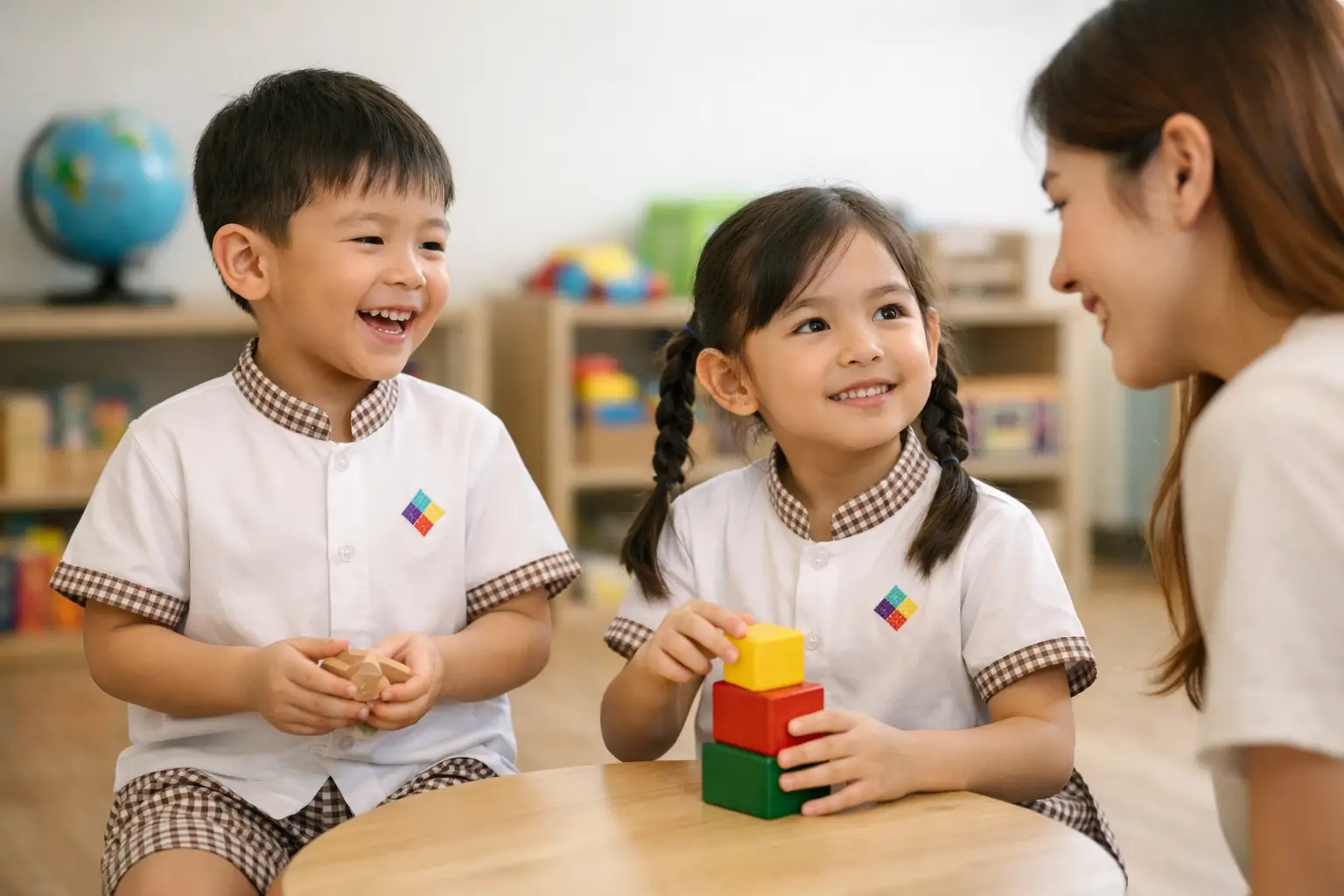
A more effective preschool approach includes intentional teacher-child conversations, storytelling, music, role play, picture discussion, and hands-on experiences that give children a reason to use language. When a child builds with blocks, investigates a science activity, or joins a movement game, educators can naturally introduce vocabulary, sequencing, and conversational turn-taking.
This is where developmental depth becomes important. Rich bilingual learning often happens when children are engaged physically, cognitively, and socially at the same time.
Curriculum quality matters more than branding
A polished campus and attractive brochure can create a strong first impression, but parents should pay closer attention to how the curriculum works day to day. The best bilingual preschool in Singapore for one child may not be the best for another, because children differ in temperament, learning pace, and communication style.
Still, there are clear signs of quality. A thoughtful preschool curriculum should balance structured learning with purposeful play. It should support language development, early numeracy, motor coordination, social-emotional growth, and self-help skills in an integrated way. It should also be clear how teachers observe progress and adapt support when a child needs more time or more challenge.
Be cautious of programmes that seem academically advanced but developmentally narrow. A child who can recite facts early may still need support with listening, focus, resilience, or expressive speech. Families looking for long-term value should prioritise a preschool that develops the whole child, not just visible academic performance.
Why communication skills deserve special attention
Parents often say they want their child to be confident, but confidence in the early years is usually built through communication. Children become more secure when they can express needs, participate in routines, ask for help, and share ideas successfully.
That is why communication development should be a major part of your preschool search. In a high-quality bilingual setting, communication is taught intentionally through storytelling, songs, guided discussion, imaginative play, and teacher modelling. These experiences support pronunciation, listening comprehension, vocabulary growth, and sentence formation.
There is also a cognitive benefit. When children strengthen listening and auditory discrimination, they often become better at remembering instructions, maintaining attention, and processing classroom information. For parents who want more than care provision, this is a meaningful difference.
Enrichment should support development, not just fill a timetable
Many preschools offer enrichment, but not all enrichment is equally valuable. Some programmes feel like add-ons designed to impress parents rather than support consistent developmental progress. The better question is whether the enrichment is connected to meaningful outcomes.
Music is a strong example. In the early years, a structured music education programme can support auditory memory, concentration, rhythm, listening discipline, and expressive confidence. When delivered well, it can also strengthen the foundations children need for language learning. That connection is often overlooked.
Likewise, hands-on science exploration can build vocabulary, curiosity, reasoning, and problem-solving. Active kinaesthetic learning can improve body awareness, coordination, and self-regulation while helping energetic children remain engaged. These are not extras in the superficial sense. They can become powerful tools for whole-child development when they are integrated purposefully.
A2E Kids takes this wider view seriously through a full-day bilingual child development programme that combines communication growth, exploratory learning, and music education, including free violin and piano enrichment. For families seeking one environment that nurtures memory, focus, creativity, and confidence together, that kind of structure can be especially valuable.
The care environment still matters enormously
When parents compare preschools, curriculum often gets most of the attention. Yet children cannot learn well if they do not feel secure. Warmth, consistency, and emotional safety are essential, especially for younger children adjusting to longer days away from home.
The best bilingual preschool Singapore families choose should have educators who are calm, observant, and responsive. Children need predictable routines, gentle transitions, and teachers who understand how to support separation anxiety, peer conflict, and changing moods. A highly stimulating environment is not always the best environment if it overwhelms the child.
This is especially true for infants and younger preschoolers. At these ages, care and education are not separate categories. Nurturing care is part of effective learning.
Questions worth asking on a preschool visit
A school visit should help you understand how children actually experience the programme. Ask how both languages are used during the day, not just taught during designated lessons. Ask how teachers support quieter children, how they build vocabulary through play, and how they communicate developmental progress with parents.
It is also helpful to ask how enrichment is linked to learning goals. If a preschool offers music, movement, or science activities, what skills are they designed to strengthen? Attention? Communication? Creativity? Coordination? The strongest schools can answer clearly because their programme has intention behind it.
Finally, observe the children. Are they curious, settled, and engaged? Do teachers speak to them with warmth and respect? Do routines appear organised without feeling rigid? Parents often sense the right fit not through slogans but through the emotional tone of the environment.
It depends on your child and your family priorities
There is no single formula for choosing the right preschool. Some families prioritise stronger Mandarin immersion. Others want a balanced bilingual setting with more emphasis on communication confidence. Some children thrive in highly social environments, while others need gentler pacing and more individual reassurance.
A practical choice is one that fits your child as they are now while also supporting who they are becoming. If your child is expressive but easily distracted, a programme that builds focus and listening may matter most. If your child is observant but slow to speak, communication-rich routines and music-based auditory learning may be particularly helpful.
The best decision is rarely about prestige. It is about alignment.
When you look for a preschool, look for purposeful bilingual learning, strong educator-child relationships, and a developmental philosophy that goes beyond supervision. Your child’s early years deserve more than a timetable filled with activities. They deserve an environment that genuinely strengthens language, thinking, creativity, well-being, and confidence – one thoughtful day at a time.
Leave a Reply