At 3 months old, your baby cannot tell you whether a space feels calm, whether a caregiver is responsive, or whether a daily routine supports healthy development. Yet those early details shape far more than convenience for parents. When families search for the best infant care Singapore has to offer, they are often choosing not just a place of care, but the environment that will support their child’s first habits of trust, communication, attention, and learning.
That is why the right question is not simply, “Which infant care centre has a vacancy?” It is, “Which setting will genuinely support my child’s well-being and development each day?” For parents who want more than basic supervision, the difference matters.
What the best infant care in Singapore should really provide
A strong infant care programme begins with safe, consistent, loving care. That foundation is non-negotiable. Babies need responsive adults who notice feeding cues, recognise different cries, support sleep rhythms, and create a sense of security through steady routines.
But the best infant care in Singapore should go further than meeting physical needs alone. Infancy is a period of rapid brain development. Every interaction, from eye contact to song, from tummy time to language exposure, helps build neural connections. A high-quality programme understands that care and education are not separate at this age. They happen together, moment by moment.
This does not mean infants need a packed timetable or formal academics. In fact, that would be inappropriate. It means they need purposeful experiences delivered gently and consistently. A caregiver speaking clearly during diaper changes, introducing songs with rhythm and repetition, encouraging sensory exploration, and supporting movement milestones is already shaping communication, memory, focus, and confidence.
Look beyond convenience and ask better questions
Location, fees, and operating hours are practical concerns, and understandably so. For working parents, logistics can determine whether daily life is manageable. Still, convenience should not be the main measure of quality.
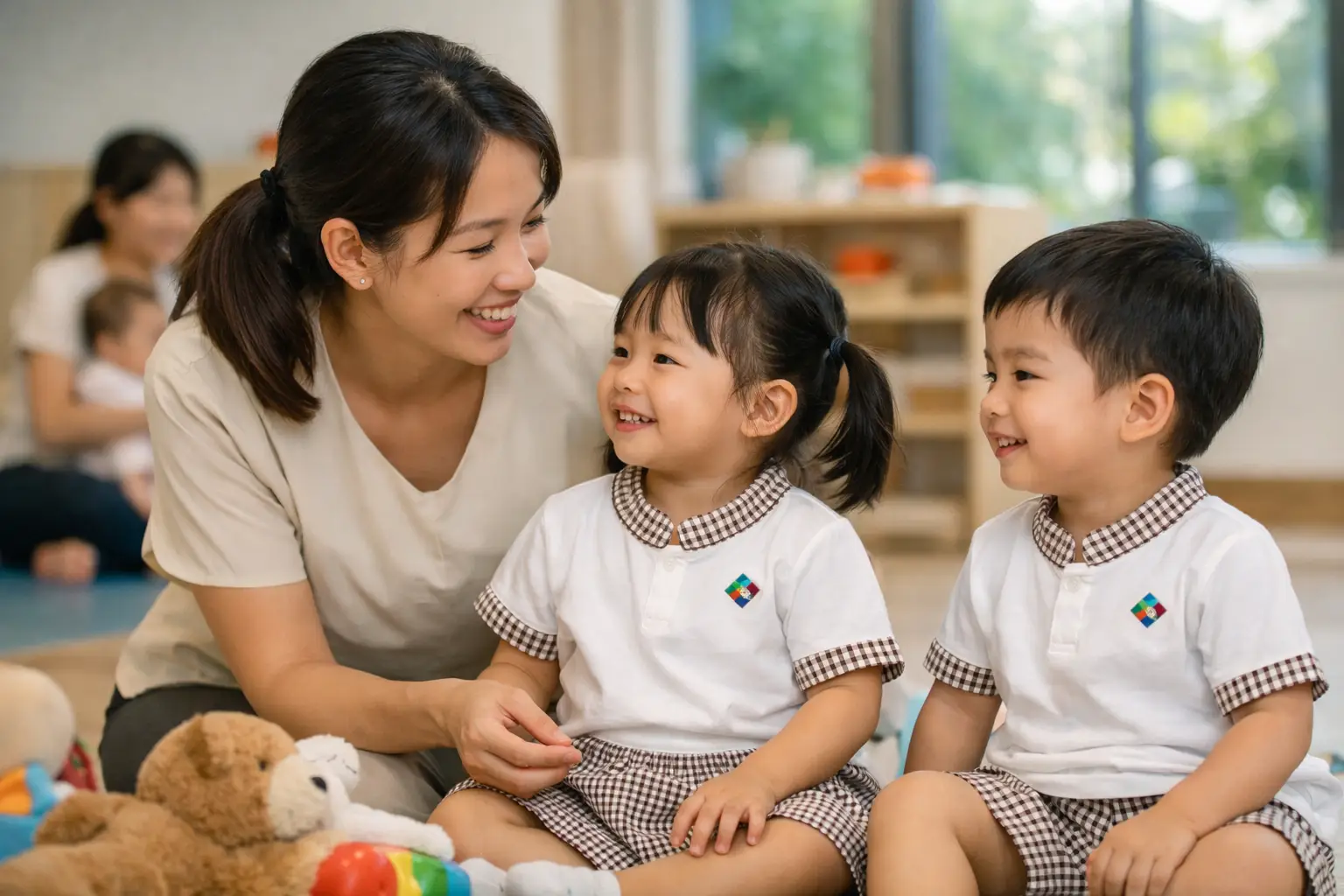
When visiting a centre, observe how adults interact with babies. Are they warm and attentive, or are they rushing through routines? Do they speak to the infants, even before the children can answer with words? Is there a calm structure to the day? These details tell you far more than a glossy brochure.
It also helps to ask how the programme supports development across multiple domains. Physical growth, language exposure, social-emotional security, sensory learning, and early cognitive development should all have a place. If a centre only speaks about feeding and napping, it may be offering care that is functional, but not truly developmental.
Caregiving quality matters more than marketing claims
Many centres describe themselves as nurturing, stimulating, or holistic. Those words sound reassuring, but parents should look for what they mean in practice.
For example, a nurturing environment is not just soft furnishings and cheerful walls. It is caregivers who respond promptly, hold babies appropriately, encourage secure attachment, and treat each child as an individual. A stimulating environment is not one filled with bright plastic objects or constant noise. It is one where babies are offered age-appropriate sensory experiences, language-rich interaction, music, movement, and space to explore without being overwhelmed.
Holistic development is another phrase worth examining carefully. In infant care, it should mean that the programme supports the whole child – body, brain, emotions, communication, and emerging independence. The best settings understand that these areas are connected. A baby who feels secure is more ready to explore. A baby who hears rich language regularly is building the foundations for later communication and literacy. A baby who is encouraged to move safely develops not just strength, but curiosity and confidence.
Why language and communication deserve early attention
One of the clearest signs of quality infant care is how seriously a centre takes early communication. Babies begin learning language long before they speak. They absorb sounds, rhythms, facial expressions, and patterns of interaction from the adults around them.
In a thoughtful programme, caregivers do not simply complete tasks. They narrate, sing, label, repeat, and respond. They make eye contact, pause for interaction, and create opportunities for turn-taking, even in very simple forms. Over time, these experiences support listening skills, comprehension, memory, and expressive confidence.
For many families, bilingual exposure is also an important priority. In Singapore, that can be especially valuable when introduced naturally through songs, stories, and daily interactions rather than forced instruction. The goal at this stage is not performance. It is familiarity, comfort, and a strong base for future communication.
Music and sensory learning are more important than many parents realise
Parents often think of music as an optional extra for older children. In reality, carefully introduced music can be deeply beneficial in infancy. Rhythm, melody, repetition, and movement all support auditory discrimination, memory, attention span, and emotional regulation.
A meaningful music component is not background entertainment. It should be intentional, age-appropriate, and connected to development. Repetitive songs can support recognition and anticipation. Gentle movement with music can strengthen body awareness. Musical interaction can also encourage bonding and early expressive response.
This is one area where a truly differentiated child development programme can stand out. A2E Kids, for instance, is known for its structured Music Education Programme, including free Violin and Piano Enrichment at later stages, with a broader developmental philosophy that values memory, focus, creativity, and communication from the earliest years. For parents who want an all-in-one environment rather than fragmented enrichment added on elsewhere, that kind of educational continuity can be especially appealing.
The environment should feel calm, purposeful, and clean
Parents often notice cleanliness first, and rightly so. Hygiene standards matter greatly in infant care. Babies are vulnerable, and clean feeding, sleeping, and play spaces are essential.
Even so, hygiene alone does not define quality. The atmosphere should also feel calm and well-organised. Babies do not thrive in chaotic settings with constant overstimulation. Look for spaces that are safe, uncluttered, and arranged to support different needs – rest, feeding, floor play, sensory exploration, and caregiver interaction.
A purposeful environment also reflects thoughtful pedagogy. Materials should be suitable for infant development, not simply decorative. There should be opportunities for supervised movement, sensory discovery, and quiet engagement. The best centres know that a well-designed environment helps babies feel secure enough to learn.
Staff consistency can shape your child’s sense of security
One practical issue parents sometimes overlook is staff continuity. Babies build trust through repeated, predictable relationships. If caregivers are changing constantly, it can be harder for infants to settle and for staff to understand each child deeply.
That does not mean every centre with staff changes should be ruled out. Reality is more nuanced than that. However, it is sensible to ask about staff retention, caregiver-to-child ratios, training, and how handovers are managed. A centre with stable, well-trained educators often provides stronger emotional consistency and clearer developmental observation.
This matters for parents too. When the same professionals know your child well, communication becomes more meaningful. You are not just hearing whether your baby drank milk or slept. You are learning how your child is progressing, what they are responding to, and where they may need more support.
Developmental ambition should still respect infancy
There is a balance to strike. Some parents want the best infant care Singapore can provide because they value early learning and want their child to have every advantage. That instinct is understandable. Yet the strongest infant programmes do not rush babies into formal outcomes.
Instead, they respect the pace of infancy while still being intentional. They build school readiness by first building attention, curiosity, communication, motor confidence, and emotional security. They understand that later success rests on these foundations.
This is where a developmental approach is different from simple daycare. It asks not just whether a baby is cared for, but whether each day supports meaningful growth. It sees feeding, music, movement, language, and play as part of one connected learning journey.
How parents can tell when a centre is the right fit
Sometimes the right choice becomes clear through observation rather than comparison charts. You may notice that the babies seem settled. The caregivers speak with warmth and confidence. The routines feel structured but not rigid. The programme reflects real thought about development, not just occupancy.
It is also worth paying attention to how the centre speaks to you as a parent. A quality provider should welcome thoughtful questions and be able to explain its approach clearly. If the team can describe how they support communication, sensory learning, physical milestones, and emotional well-being in practical terms, that is a good sign.
Most importantly, trust the combination of evidence and instinct. Parents should not have to choose between nurture and developmental quality. The best infant care offers both, because babies need both.
Your child’s earliest months and years are not a waiting room for “real learning” to begin later. They are the beginning of everything – attachment, language, confidence, curiosity, and the habits of mind that support future growth. Choosing carefully now can give your child a stronger, calmer, more joyful start, and that is a decision with lasting value.
Leave a Reply