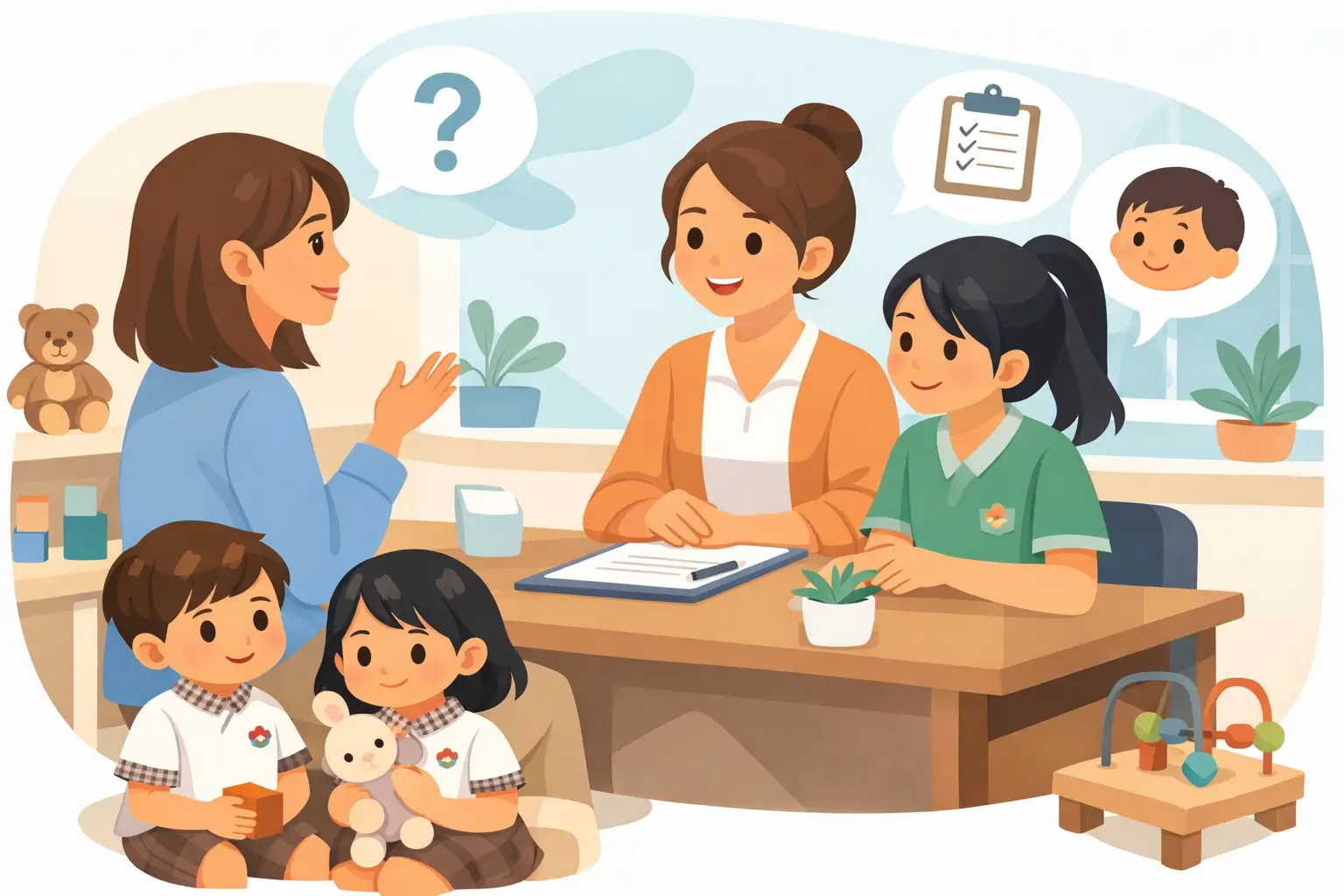
Choosing a nursery can feel deceptively simple until you step through the door and realise how much is happening at once. The most useful questions to ask nursery staff are not just about fees, meals, and nap times. They help you understand how a setting thinks, how it responds to children, and whether it can genuinely support your child’s well-being and development.
For many parents, the real challenge is knowing what to listen for. A polished tour can show you tidy classrooms and cheerful displays, but strong early years practice is revealed in the details – how staff talk about communication, how they handle transitions, how they observe progress, and how they build confidence in very young children. If you are looking for more than basic childcare, your questions should go beyond supervision and into developmental quality.
Why the right questions matter
A nursery is not simply a place where children are kept safe while parents work, though safety is of course essential. It is an early learning environment that shapes language, emotional security, attention span, self-help skills, curiosity, and social confidence. In the first years of life, small daily interactions carry enormous weight.
That is why good questions do two things at once. They help you assess practical fit for your family, and they reveal whether the nursery has a thoughtful educational approach. A strong answer should feel clear, specific, and child-centred. If replies are vague or overly scripted, that is worth noticing.
Questions to ask nursery staff about daily care
A good starting point is the child’s everyday experience. Ask, “What does a typical day look like for my child’s age group?” You are listening for rhythm rather than rigid scheduling. Young children benefit from predictable routines, but the best nurseries also stay responsive to individual needs, especially for infants and younger toddlers.
You might also ask how meals, rest, toileting, and transitions are handled. These parts of the day are often where a nursery’s values become visible. Does the team encourage independence in age-appropriate ways? Are children rushed, or supported calmly? Is care treated as part of learning rather than separate from it?
If your child is starting nursery for the first time, ask how settling-in works. Some children adjust quickly, while others need a gentler transition. Staff should be able to explain how they support separation, build trust, and communicate with parents during the early days. There is no single perfect method, but there should be a clear and compassionate process.
Questions to ask nursery staff about safety and well-being
Every parent asks whether a nursery is safe. A better question is how safety is practised every day. Ask, “How do you supervise children during play, meals, toileting, and outdoor time?” This gives staff the chance to explain their routines, ratios, and level of attentiveness.
It is also helpful to ask how they handle illness, allergies, accidents, and emergencies. Strong nurseries answer confidently without sounding defensive. They should be able to explain not only procedures, but how they keep parents informed.
Emotional safety matters just as much as physical safety. Ask how staff respond when a child is upset, frustrated, or overwhelmed. You want to hear language that reflects warmth, co-regulation, and respect. Very young children are still learning how to manage feelings. A nurturing nursery helps them feel understood while gradually building resilience.
What to ask about learning and development
This is where many nursery visits become far more revealing. Ask, “How do you support language and communication development?” and listen carefully. Rich early years environments do not rely only on worksheets or passive activities. They create daily opportunities for children to listen, speak, sing, question, describe, and interact meaningfully.
If bilingual exposure matters to your family, ask how both languages are used naturally through the day. It is worth finding out whether language learning is embedded in routines, stories, songs, and conversation, rather than treated as an isolated lesson.
You can also ask how the nursery supports cognitive growth, creativity, and concentration. Strong settings usually talk about hands-on exploration, purposeful play, problem-solving, music, movement, and guided experiences that suit a child’s developmental stage. If staff can explain why an activity matters, that is often a sign of stronger pedagogy.
For parents who want a more enriched early learning experience, ask what makes the programme distinct. Some nurseries offer extras, but the key question is whether those experiences are developmentally meaningful. Music, movement, sensory exploration, and beginner STEM activities can be powerful when they are integrated thoughtfully and not added simply for marketing appeal. At A2E Kids, for example, enrichment is designed to support memory, focus, communication, creativity, and whole-child growth rather than fill time.
Ask how progress is observed and shared
A nursery should know your child as an individual, not just as part of a group. Ask how staff observe development and how they share progress with parents. Do they track milestones? Do they notice emerging interests, communication patterns, or areas where extra support may help?
The best answers balance professionalism with realism. Child development is not a straight line, and high-quality staff understand that children grow at different rates. You want a nursery that notices patterns early without turning every variation into a problem.
It is also worth asking how often parents receive updates and what form those updates take. Some families prefer daily practical notes, while others value deeper developmental feedback over time. Neither is wrong, but clarity matters. A good partnership depends on communication that is regular, honest, and useful.
Ask about behaviour, relationships, and confidence
One of the strongest questions to ask nursery staff is, “How do you support positive behaviour?” The answer should go beyond discipline. In early childhood, behaviour is communication. Skilled staff look at what a child may be expressing – tiredness, frustration, overstimulation, uncertainty, or the need for connection.
Ask how children are guided through sharing, waiting, taking turns, and resolving simple conflicts. A strong nursery helps children develop social understanding without expecting unrealistic maturity. The goal is not quiet compliance. It is gradual self-regulation, empathy, and confidence.
Relationships are central here. Ask whether your child will have key staff members who get to know them well. Consistent attachment figures in a nursery setting can make a profound difference, especially for younger children or those who are naturally more cautious.
Questions about staff quality and stability
Parents sometimes feel awkward asking about staff qualifications or turnover, but these are sensible questions. Ask how experienced the team is, what training they receive, and how long staff tend to stay. Continuity matters. Children thrive when the adults around them are familiar, capable, and emotionally available.
You can also ask how staff are supported professionally. Nurseries with a genuine educational ethos often invest in ongoing training around child development, communication, safeguarding, and inclusive practice. That usually shows up in the quality of everyday interactions.
Notice how answers are given
What staff say matters, but how they say it matters too. Do they answer warmly and specifically, or do they fall back on generic phrases? Do they seem to know children as individuals? Can they explain their approach in a way that feels thoughtful and grounded?
Trust your observation alongside the information you receive. If a nursery speaks confidently about development but the rooms feel tense or disengaged, pay attention to that mismatch. On the other hand, a setting does not need to feel flashy to be excellent. Calm, responsive, well-organised environments often tell you more than glossy presentation.
A simple way to narrow your decision
If you are comparing a few nurseries, ask yourself which one gave you the clearest sense of purpose. Not just care, not just activity, but purposeful early learning. Did the staff speak about children with respect? Did they understand development in a nuanced way? Did you leave with the feeling that your child would be known, encouraged, and supported to grow?
The best nursery for your family may not be the one with the longest list of features. It may be the one where care and pedagogy genuinely work together – where safety, communication, creativity, structure, and emotional warmth are treated as part of the same whole.
A nursery choice is rarely about finding perfection. It is about finding a setting where your child can feel secure, curious, and steadily strengthened in the skills that matter most. Ask thoughtful questions, listen for substance, and give yourself permission to choose the place that feels ready to partner with your child’s development, not just supervise it.
Leave a Reply