Choosing a programme for your young child can feel deceptively simple until you start looking closely. One setting says it is nurturing, another promises school readiness, and a third highlights language exposure. A useful bilingual child care review goes beyond those headlines. It looks at how a child is actually guided, spoken to, challenged and cared for across the day.
For families who want more than basic supervision, the real question is not whether a child hears two languages in the room. It is whether the environment supports confident communication, cognitive growth, emotional security and joyful learning in a way that is developmentally sound. That is where a thoughtful review becomes valuable.
What a bilingual child care review should really assess
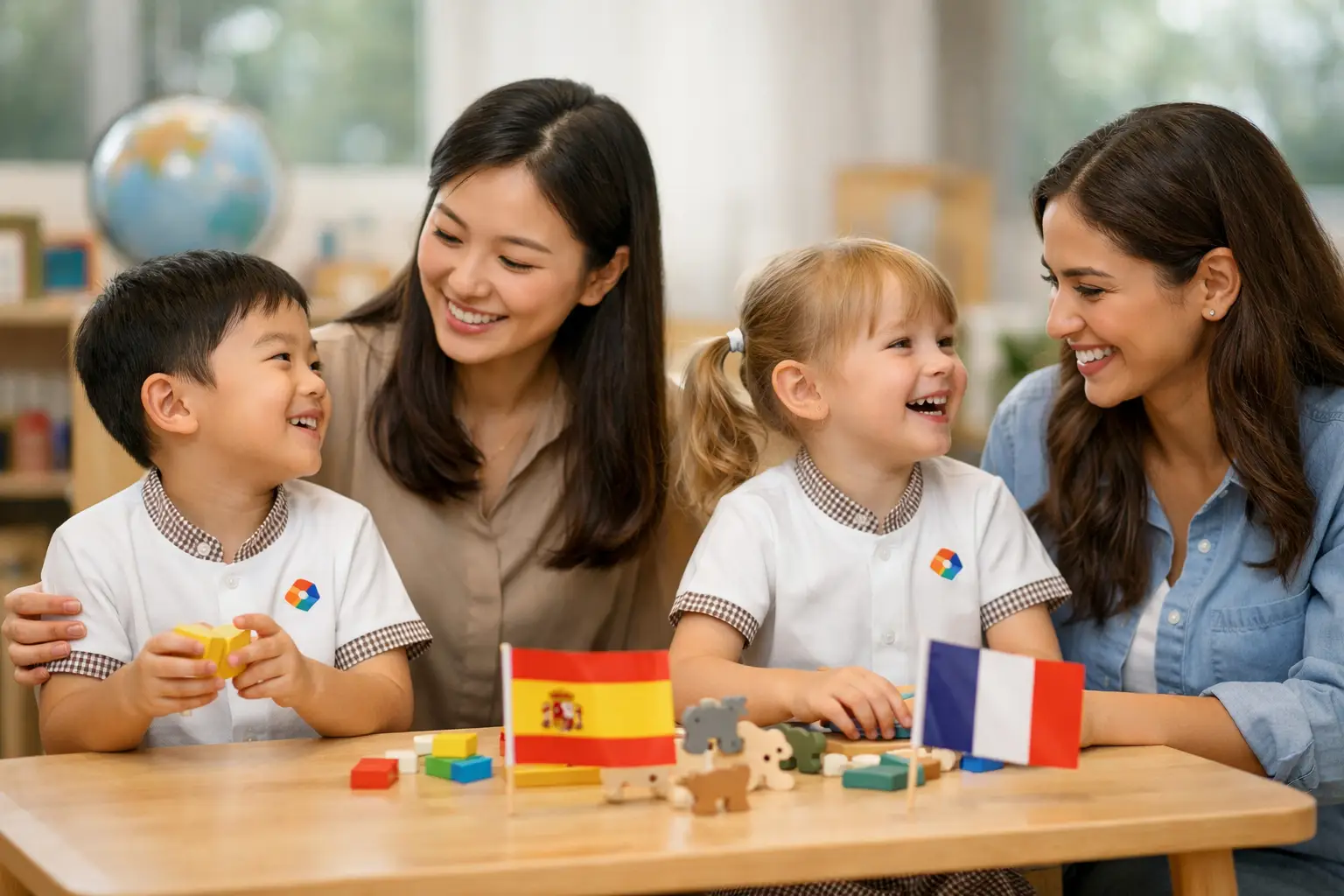
The strongest bilingual programmes do not treat language as a decorative extra. They build it into routines, relationships and learning experiences from the moment children arrive. Greetings, snack time, music, storytelling, movement, play-based discovery and transitions all become opportunities for meaningful language use.
This matters because young children learn language through repetition, context and emotional connection. If a setting advertises bilingual learning but limits the second language to a short daily segment, children may gain familiarity without developing true comfort. By contrast, when both languages are woven naturally into everyday interactions, children are more likely to build comprehension, confidence and flexibility in expression.
A strong review should also consider whether the programme respects the pace of early childhood development. Not every child will respond in both languages immediately. Some will listen for months before speaking more confidently. That is not a weakness. It is often a normal part of language acquisition. Good educators understand this and create low-pressure opportunities for participation.
Beyond language exposure: what quality looks like
Many parents begin with language goals, but quality child care is always broader than vocabulary. A well-designed bilingual setting should support the whole child. That includes cognitive development, social-emotional security, physical confidence, communication skills and growing independence.
In practice, that means looking at the structure behind the programme. Are educators simply switching between languages, or are they using age-appropriate teaching strategies that help children make sense of what they hear? Are songs, stories and movement activities chosen with intention? Do children have hands-on experiences that connect words to action, memory and meaning?
This is where developmental enrichment can make a noticeable difference. Music, rhythm, guided speech work and kinaesthetic learning often support language retention more effectively than passive listening alone. When children clap syllables, sing patterned phrases, move while naming actions and engage their senses in structured play, language learning becomes more memorable and more natural.
The signs of a thoughtful bilingual child care review
When parents review a bilingual child care programme, it helps to move past marketing language and observe what happens in real life. A caring environment should feel warm, but it should also feel purposeful. You want to see children who are not only occupied, but engaged.
One useful sign is the quality of adult-child interaction. Educators should speak clearly, respond warmly and extend a child’s thinking rather than simply giving instructions. If a child points at an object, a skilled educator might name it, describe it, compare it and invite a response in one or both languages. That kind of exchange develops far more than recall. It builds attention, listening and expressive confidence.
Another sign is how the programme handles routine. Young children thrive when days are predictable enough to feel secure, but varied enough to remain stimulating. In a high-quality setting, bilingual learning does not interrupt the rhythm of care. It strengthens it. Language is used to help children anticipate what comes next, regulate emotions, express needs and participate in group life.
Parents should also notice whether the environment supports concentration. Busy walls and endless activities can look impressive, but they do not always lead to better learning. Children benefit from spaces that are calm, inviting and organised around purposeful exploration. Focus, memory and attention span grow best when children are not constantly overstimulated.
Questions worth asking before you enrol
A review becomes much more useful when it includes the right questions. Ask how both languages are used throughout the day, not just during formal lessons. Ask how educators support children who are shy, slower to speak or newer to one of the languages. Ask how the programme balances academic foundations with play, movement and rest.
It is also worth asking how communication development is supported beyond basic language exposure. Some programmes are stronger because they intentionally nurture pronunciation, listening, expressive language and confidence in speaking. This can be especially valuable in the early years, when habits of communication begin to form.
You may also want to ask about enrichment. Music, for instance, is not merely an attractive extra. In the right setting, it can support auditory discrimination, pattern recognition, memory and self-expression. These are all deeply connected to language development and early learning readiness.
Trade-offs parents should consider
There is no single perfect model for every child. Some bilingual programmes are highly structured, while others are more play-led. Some prioritise strong academic readiness early, while others focus more on social confidence and language immersion. The best choice depends on your child’s temperament, developmental stage and family priorities.
A quieter child may flourish in a setting with gentle encouragement and strong relational teaching. A highly active child may benefit from a programme that includes movement-rich learning and hands-on exploration rather than long periods of sitting still. A child with strong verbal confidence in one language may need more intentional support in the second.
It is also helpful to be realistic about outcomes. Bilingual child care can create an excellent foundation, but language growth is not usually instant or perfectly balanced. Progress may show first in comprehension, then in single-word responses, then in more spontaneous speech. What matters most is whether the programme is building capability steadily and sustainably.
Why enrichment matters in early bilingual education
One of the clearest differences between standard daycare and a premium developmental programme is the quality of enrichment built into the child’s experience. This matters because early learning is not split neatly into separate compartments. Language, memory, movement, creativity and confidence develop together.
When children engage in music instruction, speech and vocal activities, exploratory play and active learning, they are doing far more than filling time. They are strengthening attention, listening accuracy, sequencing skills and expressive control. These abilities support bilingual development in practical ways.
For example, a child who learns through song often recalls sounds and phrases more readily. A child who practises speaking in a supportive setting may grow more confident using language socially. A child who learns through movement may understand and retain concepts more effectively than through verbal instruction alone. This integrated approach is often what turns language exposure into meaningful development.
That is one reason some families in Singapore look for programmes that combine bilingual education with specialist enrichment. At A2E Kids, this kind of whole-child model reflects a clear belief that Your Child’s Well-being and Development is our Top Priority. It is not simply about hearing two languages. It is about helping children build the cognitive, communicative and creative foundations that allow them to thrive.
What parents often notice first
In many strong programmes, the first visible changes are not dramatic academic milestones. Parents often notice that their child is listening more closely, following routines more independently, attempting new words with greater confidence or showing stronger recall through songs and repeated phrases.
These early shifts matter. They suggest that the child is not only adapting to the environment, but learning how to learn within it. Attention span, confidence, responsiveness and verbal curiosity are powerful indicators in the early years. They often come before more obvious achievements and can tell you a great deal about programme quality.
Equally, a good setting should keep parents informed without overwhelming them. Families do not need constant jargon. They need thoughtful communication about how their child is developing, what is being nurtured and where support is being given. Trust grows when educators can explain the why behind the daily experience.
Making the review personal to your child
The most helpful bilingual child care review is the one that considers your child as an individual. A programme may look excellent on paper and still not be the right fit. That is why observation matters. Notice how your child responds to the environment, how educators respond to your child, and whether the setting feels both nurturing and intentionally developmental.
Look for a place where language is alive, not performative. Look for educators who understand childhood, not just curriculum. Look for a programme that sees bilingual development as part of a bigger picture that includes confidence, creativity, memory, focus and emotional well-being.
When a child is cared for in that kind of environment, progress tends to feel more grounded and more lasting. And for many families, that is the real value of choosing carefully – not simply finding a place that offers two languages, but finding one that helps a young child grow into them with security, curiosity and joy.
Leave a Reply