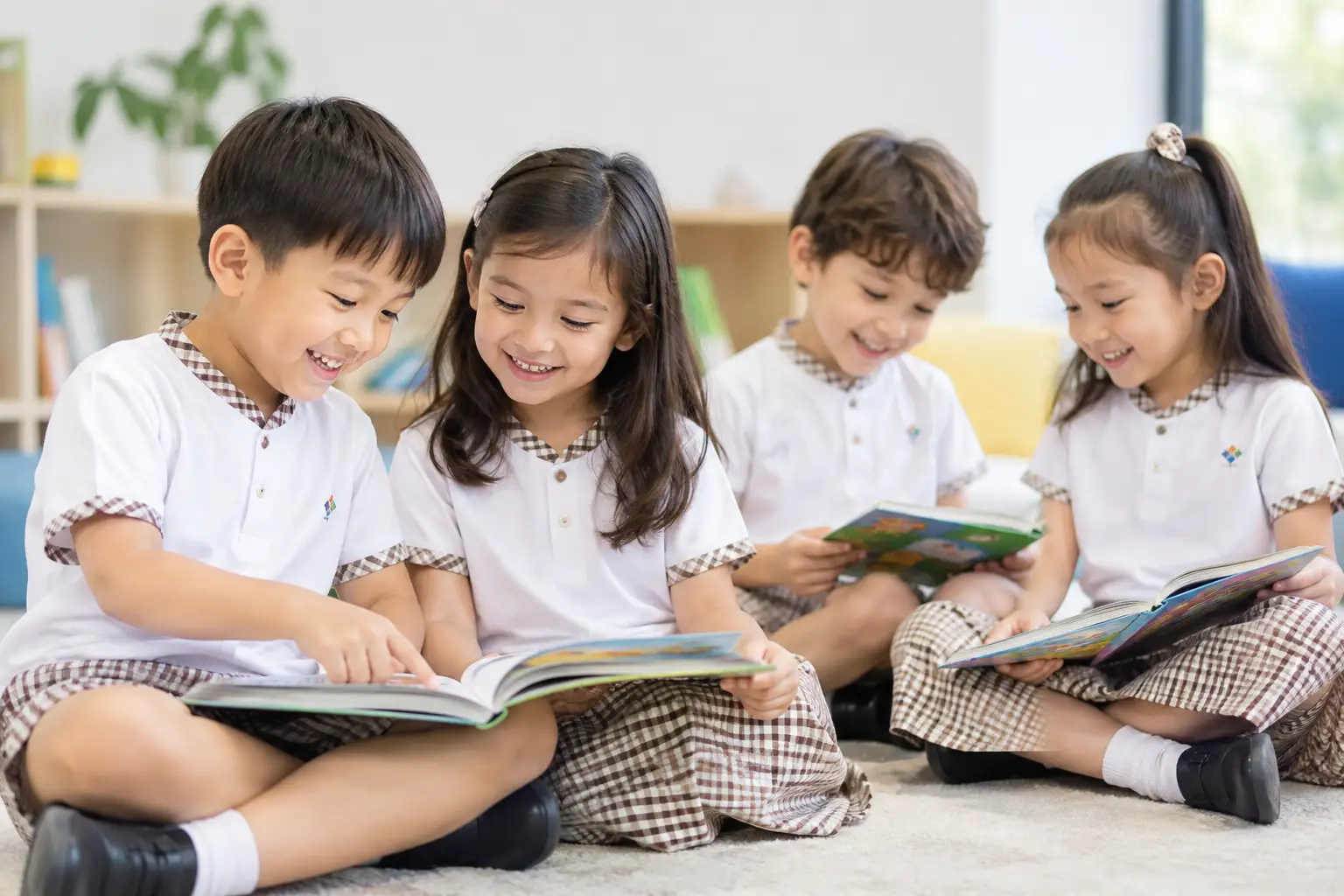
A child who eagerly points to a familiar sign, joins in with the last line of a favourite rhyme, or tells you what happened in a picture book is already developing early literacy. These moments may seem small, but they are meaningful signs that language, attention, memory and confidence are beginning to work together.
Reading does not start when a child sounds out words independently. It starts much earlier, through warm conversations, songs, gestures, books, imaginative play and repeated routines. For parents, this is encouraging news: purposeful support does not mean turning every family moment into a lesson. It means giving children rich, responsive experiences that help them make sense of language and the world around them.
What early literacy really means
Early literacy is the collection of communication skills children develop before they become conventional readers and writers. It includes listening carefully, understanding spoken language, learning new vocabulary, noticing sounds in words, recognising that print carries meaning and building the hand control needed for mark-making and writing.
These skills grow together. A child who understands a story can later retell it. A child who hears the rhythm in a nursery rhyme is becoming more aware of sounds within language. A child who draws a map of a pretend zoo is learning that marks and symbols can represent ideas.
This is why early literacy should never be reduced to flashcards or memorising the alphabet. Letter knowledge has a place, but it is most valuable when children understand that letters connect to sounds and meaningful words. A strong foundation is built through interaction, not passive exposure.
Why language-rich experiences matter
Young children learn language through relationships. When an adult notices what interests a child, responds to their attempts to communicate and adds a little more language, the child learns that their thoughts matter.
For example, if a toddler points at a bus and says, “Bus”, an adult might reply, “Yes, a big red bus. Where do you think it is going?” This short exchange introduces descriptive vocabulary, invites thinking and creates a natural reason to speak. There is no need to correct every imperfect word. Modelling clear language with warmth is usually more helpful than interrupting a child’s confidence.
Repeated experiences are equally valuable. Reading the same story several times may test an adult’s patience, yet repetition helps children anticipate language, recognise patterns and remember new words. When they begin to “read” the story back from the pictures, they are practising comprehension and narrative skills.
Bilingual children benefit from this same responsive approach. Families should feel confident using the language in which they can express affection, humour and ideas most naturally. A rich home language provides a secure base for learning English and additional languages. Rather than treating languages as competing systems, adults can help children make meaningful connections between them.
Listening comes before reading
Before children can match letters to sounds, they need to hear differences between sounds. Clapping syllables in names, noticing words that rhyme and copying simple sound patterns all develop phonological awareness. These activities can happen during a walk, while getting dressed or in the car journey home.
Music can be especially supportive because rhythm, repetition and melody make language memorable. Singing a familiar song encourages children to listen for sequence, wait for their turn and predict what comes next. These are useful learning habits, not merely entertainment.
At A2E Kids, structured music experiences, including violin and piano enrichment, sit alongside communication and exploratory learning. Used thoughtfully, musical routines and auditory mnemonics can give children engaging ways to practise listening, recall and focused attention while enjoying shared participation.
Early literacy through play and everyday life
The most effective early learning often looks like play because play gives language a purpose. Children are more likely to use new words when they are planning a pretend café, negotiating who will be the doctor or explaining how they built a tower.
A home or early childhood setting does not need expensive resources to create these opportunities. A basket of safe household objects can prompt sorting, describing and imaginative storytelling. A trip to the market can become a conversation about colours, quantities, textures and signs. Cooking together introduces sequencing language such as first, next and last.
Books remain central, but the goal is not to rush through every page. Pause over illustrations. Ask, “What do you notice?” or “How do you think she feels?” Give the child time to answer, even if the answer is a single word or a gesture. Questions with no single correct response encourage children to observe, infer and express their own ideas.
Mark-making matters too. Scribbles, lines and shapes are early experiments in written communication. Offer crayons, chalk, paintbrushes and paper in ways that feel inviting rather than pressured. If a child says their drawing is a spaceship, write their words beside it and read them back. They begin to see that spoken language can become print.
Building early literacy without adding pressure
Parents naturally want to prepare their children for school. The difficulty is that a strong desire to help can sometimes lead to pressure before a child is ready. Worksheets and drills may produce short-term recall, but they do not always create curiosity, comprehension or a love of books.
A more balanced approach follows the child’s developmental stage. An infant benefits from face-to-face conversation, songs and sturdy board books. A toddler may enjoy naming pictures, filling in repeated phrases and acting out stories. Preschoolers can begin noticing letters in meaningful contexts, experimenting with rhyme, retelling events and making their own simple books.
Some children speak early and confidently; others spend longer listening before they begin to talk. Some are captivated by letters, while others enter literacy through stories, construction play or music. Differences are normal. What matters is steady exposure, emotional security and adults who notice progress without making comparisons.
If a child persistently finds it hard to hear, understand directions, express themselves or engage with language, speak with their early childhood educator or a qualified health professional. Early support can be reassuring and practical. It should be viewed as a way to understand a child’s needs, not as a label.
What to look for in an early childhood programme
For families choosing an early childhood programme, ask how communication is supported throughout the day, not only during a scheduled language activity. Meaningful literacy learning should appear in conversations at mealtimes, songs during transitions, storytelling, dramatic play, science exploration and shared reading.
Look for educators who extend children’s ideas instead of simply delivering information. A child investigating why an object sinks or floats, for instance, is building vocabulary, curiosity and the confidence to explain their thinking. Hands-on learning gives language a real context, which helps it stay with the child.
A quality programme also recognises the close relationship between literacy and wider development. Children need physical confidence to participate, social skills to take turns in conversation, emotional security to share ideas and focused attention to listen to a story. When these domains are nurtured together, literacy becomes part of whole-child growth rather than an isolated target.
Small habits with lasting value
The most powerful support for early literacy is often simple and consistent. Make room for unrushed conversation. Keep books within reach. Tell stories about family experiences. Sing songs even if you do not think you have a singing voice. Let children see you read menus, labels, instructions and messages for real purposes.
Above all, follow their delight. When a child brings you a book, a drawing, a question or an unusual word they have discovered, they are offering an opening for connection. Meeting that opening with attention helps them learn that language is not only a school skill. It is how they belong, imagine, remember and share who they are becoming.
Leave a Reply