
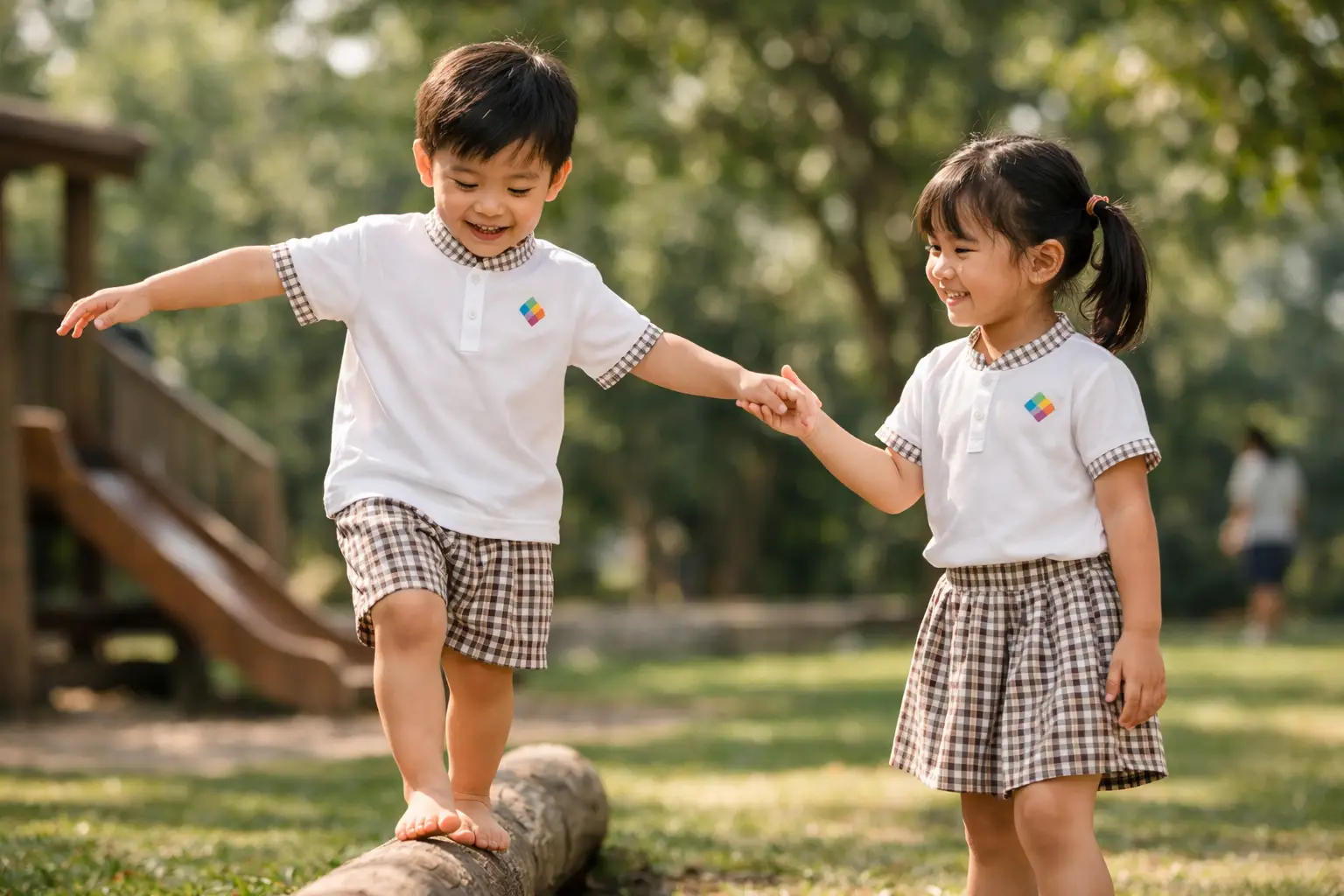
A toppled block tower, the wrong colour cup, a parent leaving for work – toddler life is full of moments that feel very big. Learning how to build toddler resilience is not about stopping those tears or asking a child to ‘be brave’ before they are ready. It is about helping them feel safe enough to experience disappointment, name what happened and gradually try again.
Resilience is a developmental skill, not a fixed personality trait. Some toddlers seem naturally easy-going, while others feel changes, noise and frustration more intensely. Both can grow into confident, capable children when caring adults provide steady support, clear expectations and regular opportunities to practise coping.
What resilience looks like in toddlers
For a toddler, resilience may look surprisingly ordinary. It is waiting briefly while an adult finishes a task, trying to fit a puzzle piece again after it fails, or recovering after a disagreement with a friend. It can also be using words, gestures or a trusted adult instead of pushing when feelings become overwhelming.
Toddlers do not yet have the brain development to manage strong emotions alone. Their resilience grows first through co-regulation: an adult stays calm, offers connection and helps the child make sense of the moment. Over time, the child borrows that calm and begins to use it independently.
This means resilience is not the same as compliance. A quiet child who suppresses sadness is not necessarily coping well, and a child who cries loudly is not necessarily less resilient. The more meaningful question is whether they are learning that difficult feelings can be expressed safely and will pass.
How to build toddler resilience with connection first
When a toddler is distressed, connection should come before correction. Get down to their level, use a calm voice and describe what you see: “You are upset because the sandcastle fell down. You worked hard on it.” This does not make the disappointment bigger. It gives the feeling a name and tells your child that they do not have to face it alone.
Once they are calmer, add a simple next step: “We can build it again,” or “Would you like help starting?” Avoid rushing straight to solutions when they are crying. A child who feels heard is more able to learn from the experience than one who feels pressured to move on quickly.
Consistency matters. If adults sometimes comfort, sometimes distract and sometimes react with frustration to the same behaviour, a toddler may struggle to predict what happens next. You do not need perfect responses. A dependable pattern of warmth, boundaries and repair is what builds trust.
Use language that supports effort
Toddlers absorb the language adults use around challenge. Rather than praising only success – “You are so clever” – notice the process: “You kept trying,” “You looked carefully,” or “That was hard and you did not give up.” This encourages children to connect progress with effort, patience and strategy.
Keep sentences short and specific. A toddler may not understand a lengthy explanation after an upset, but they can understand, “It is tricky. Try turning it,” or “You are disappointed. Breathe with me.” As communication skills develop, children gain more useful ways to ask for help, negotiate and recover from social setbacks.
Give your child manageable challenges
Resilience develops through small, repeated experiences of “I can try.” If adults step in before a child has had any chance to struggle, the child may receive the message that difficulty is dangerous or that they cannot manage without help. Yet leaving a toddler with a task far beyond their ability can lead only to frustration.
The aim is the middle ground. Offer challenges that are just difficult enough: putting on one shoe, carrying a light bag, choosing between two weather-appropriate outfits, pouring water with a small jug or helping to return toys to their place. Stay nearby, but pause before taking over.
A helpful approach is to offer graduated support. First, give your child time to attempt the task. Next, provide a small cue such as, “Hold the cup with two hands.” If needed, assist with part of the job while letting them finish the rest. This protects confidence while still allowing genuine independence.
Let safe mistakes happen
A spilled drink, a crooked drawing or a failed attempt to zip a jacket is not a problem to erase immediately. These moments teach cause and effect, persistence and practical problem-solving. You might say, “The water spilled. Let us get a cloth and clean it together.”
This is different from expecting toddlers to cope with situations that are unsafe, frightening or beyond their developmental stage. Resilience is not built through unnecessary distress. It grows when children face manageable challenges within a secure relationship.
Create predictable rhythms and flexible thinking
Toddlers cope better with change when daily life has a reliable rhythm. Regular routines for meals, rest, play and goodbyes reduce uncertainty and free up emotional energy for learning. Simple advance warnings can also prevent a small transition from becoming a major struggle: “Two more turns, then it is time to wash hands.”
At the same time, life cannot always follow the plan. A favourite educator may be away, rain may change an outdoor activity or a family outing may end early. In these moments, acknowledge the change and model flexibility: “You wanted the playground, and it is raining. That is disappointing. We can choose indoor painting or dancing today.”
Giving two acceptable choices helps toddlers experience agency without carrying an adult-sized decision. They learn that a change in plan does not mean everything is ruined. It means there is another path forward.
Use play, music and movement to practise recovery
Play gives toddlers a low-pressure space to rehearse the skills resilience requires. Board games with simple turns teach waiting and coping when another person wins. Pretend play allows children to act out worries, such as a toy being left behind or a character feeling scared, from a place of control.
Music and movement can be especially effective because they involve the body as well as the mind. Clapping a rhythm, singing a familiar song or moving slowly with an adult can help a child settle after excitement or frustration. Learning an instrument also offers gentle practice in attention, listening, repetition and trying again when a sound is not yet right.
In a purposeful early learning environment, these experiences can be woven into the day rather than treated as extras. At A2E Kids, music, exploratory learning and active kinaesthetic experiences support children as they practise focus, communication, creativity and perseverance alongside their peers.
Teach emotional recovery, not emotional avoidance
Toddlers need permission to have strong feelings, alongside guidance about what they may do with them. “You can be angry. I will not let you hit,” is clearer and more helpful than labelling the child as naughty. It separates the feeling from the behaviour and shows that boundaries can remain calm.
Build a small repertoire of recovery tools when your child is already settled. This might include taking slow breaths together, squeezing a cushion, asking for a cuddle, sitting in a quiet cosy corner or finding a trusted adult. The goal is not to force a technique during a meltdown. It is to make familiar options available over time.
After a difficult moment, return to connection. If you were impatient, repair it: “I spoke too loudly. I am sorry. Next time I will use a calmer voice.” Children learn resilience not from adults who never make mistakes, but from adults who take responsibility and reconnect.
Encourage social resilience with gentle coaching
Sharing is a complex skill for toddlers, particularly when a treasured toy is involved. Instead of demanding instant sharing, help children understand the situation: “You both want the red car. Amir is using it now. You can have a turn when he is finished.” Offer an alternative while they wait, but do not expect them to be cheerful about it immediately.
Teach simple phrases they can use with peers, such as “My turn next”, “Can I play?” and “Stop, I do not like that.” These words give children a practical alternative to grabbing, crying or withdrawing. Bilingual environments can further strengthen this learning by helping children connect feelings, needs and social language across meaningful daily interactions.
Group settings also provide valuable chances to observe how others cope. With sensitive adult guidance, children learn that friends can be upset, make amends and return to play. That is an early foundation for empathy as well as resilience.
Notice progress without expecting perfection
Resilience is rarely a straight line. A child may confidently separate from a parent for weeks, then become clingy after illness, travel or a change at home. This is not failure. Toddlers often revisit needs for reassurance as their awareness of the world expands.
Look for small changes over time: a shorter recovery after tears, more willingness to attempt a task, a new phrase used during conflict or the ability to accept help without giving up. These are meaningful signs of growth.
Your calm presence, thoughtful routines and faith in your child’s growing abilities create a powerful message: hard moments can be faced, help is available, and tomorrow brings another chance to try.
Leave a Reply