A preschool day can look busy on paper: meals, playtime, worksheets and a pick-up routine. Yet the real question for parents is more meaningful: what is your child gaining from those hours? A holistic preschool Singapore families choose should do more than keep children occupied or prepare them to recite answers. It should build the habits, confidence and curiosity that help a young child participate fully in learning and life.
For infants and preschoolers, development does not happen in neat, separate subjects. Language grows during conversations and storytelling. Physical confidence develops through movement and practical tasks. Memory and focus can be strengthened through music, rhythm and repetition. Social-emotional growth takes shape when children learn to express needs, solve small disagreements and care for others. A truly holistic programme understands these connections and plans for them with care.
What holistic learning should look like each day
Holistic education is sometimes described so broadly that it becomes difficult to assess. In a high-quality early childhood setting, it should be visible in the daily experience, not simply stated in a prospectus.
A child should have regular opportunities to listen, speak, move, create, investigate and practise independence. These experiences need structure. Free play is valuable, but it is most powerful when educators know what skills they are observing and how to extend a child’s thinking. A child building a block tower, for example, may be developing spatial awareness, persistence, language and cooperation at the same time.
The strongest programmes balance child-led discovery with purposeful teaching. Children need room to make choices and follow interests, while also benefiting from thoughtful guidance in early literacy, numeracy, communication and self-help skills. The aim is not to rush academic learning. It is to create secure foundations so that formal learning later feels achievable rather than intimidating.
For young children, wellbeing is central to this process. A child who feels safe, understood and connected is better able to take part, try again after a setback and communicate openly. Warm, responsive relationships with educators are not an extra feature of a holistic preschool. They are the basis on which every other area of learning rests.
Why bilingual communication deserves close attention
In Singapore, bilingual development is often a key consideration for families. A meaningful bilingual programme goes beyond exposing children to songs or vocabulary lists. Children need repeated, enjoyable reasons to listen and respond in both languages.
Look for classrooms where language is woven into routines, stories, dramatic play, discussions and hands-on experiences. When a child is invited to describe an experiment, retell a story or explain how they solved a problem, they are developing more than vocabulary. They are learning to organise ideas, listen to others and speak with growing confidence.
Progress will vary from child to child. Some children speak readily but need help extending their sentences; others listen closely before finding the confidence to contribute. An attentive educator notices these differences and provides the right level of encouragement. This matters especially in the early years, when communication skills can influence a child’s confidence in friendships and later classroom participation.
Parents may also wish to ask how the centre supports children from homes where more than one language is spoken. A flexible, respectful approach is usually more helpful than expecting every child to demonstrate language growth in exactly the same way.
Music, movement and hands-on discovery are not add-ons
Enrichment is most beneficial when it contributes to a child’s wider development rather than filling a timetable. Music, movement and exploratory science can each support skills that young children use every day.
A structured music programme can encourage listening, rhythm, memory and sustained attention. Learning an instrument also invites children to coordinate movement, follow sequences and practise patiently. When teaching is age-appropriate and encouraging, music gives children a constructive way to express themselves while strengthening cognitive skills.
At A2E Kids, free violin and piano enrichment forms part of a structured Music Education Programme that uses Auditory Mnemonics to support memory, focus, attention span, creativity and communication development. For parents considering this type of offering, the useful question is not simply whether music is available, but how it is taught, how regularly children participate and what developmental outcomes guide the programme.
Movement has a similarly important role. Active kinaesthetic learning helps children understand through doing. Carrying, sorting, balancing, climbing, role-playing and completing practical tasks can develop coordination, body awareness and confidence. These experiences also offer natural opportunities to learn valuable life skills, such as taking turns, caring for shared materials and persisting with a task.
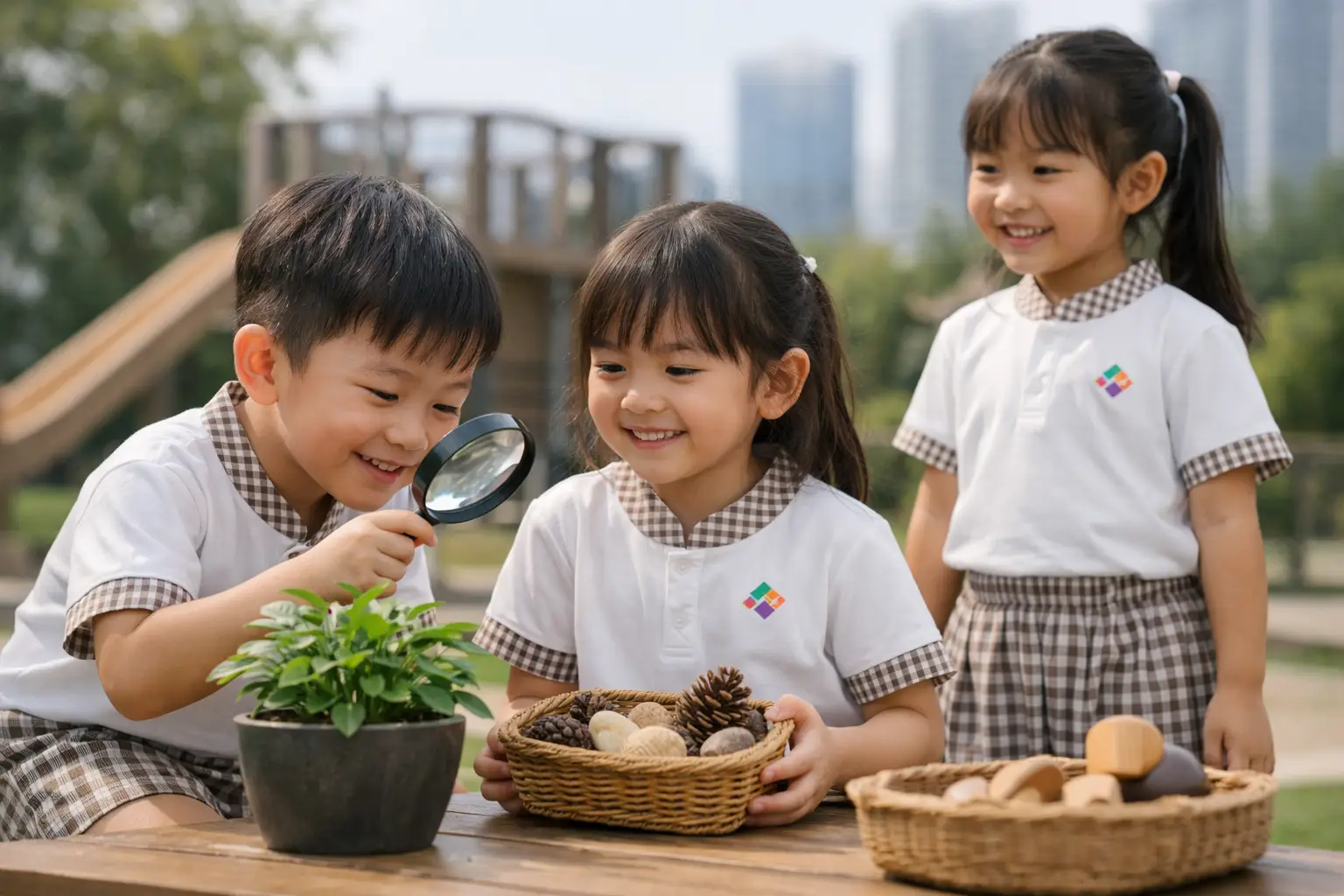
STEM exploratory learning should be hands-on at this age. Children may test what floats, observe changes in materials, compare objects or make predictions about a simple experiment. The lasting value lies in the questions they learn to ask: What happened? Why might it have happened? What could we try next? This early scientific thinking nurtures curiosity without placing pressure on children to produce a single correct answer.
How to assess a holistic preschool in Singapore
A centre visit offers more insight than a long list of programme features. Notice how educators speak with children. Are they giving clear instructions while also inviting children to share ideas? Do children appear comfortable approaching adults for help? Is the classroom calm and purposeful, with spaces for both active exploration and quieter concentration?
Ask how educators observe and communicate each child’s progress. Families should receive more than general reassurance that their child is doing well. Useful updates explain what a child is working towards, what they enjoy, where they may need support and how parents can reinforce learning at home. The conversation should include social confidence, independence and communication alongside early academic skills.
It is also worth understanding the rhythm of the day. Young children benefit from predictability, but an over-scheduled routine can leave little time for deep play, rest or individual support. On the other hand, a programme with too little structure may not provide enough intentional development. The right balance depends partly on your child’s temperament and stage of development. An energetic child may thrive with regular movement breaks, while a child who takes time to warm up may benefit from smaller-group activities and gentle transitions.
Consider the educators’ expertise as well. Holistic development requires teachers who understand how the domains of learning connect, can observe carefully and know when to guide, step back or adapt an activity. A well-resourced environment is helpful, but trained, nurturing educators bring that environment to life.
Questions that reveal what matters
When speaking with a preschool, ask how it supports children who are shy, highly active, bilingual or still developing independence. Ask how music, movement and exploratory learning connect to classroom goals. Ask how conflicts are handled, how routines are used to develop self-help skills and how families are involved in the learning journey.
The answers should be specific. A centre that can explain its approach through everyday examples is more likely to have a programme that is genuinely embedded in practice. You should also feel that your questions are welcomed. Choosing early childhood care is a significant family decision, and a trusted developmental partner will take time to understand your priorities.
Choose growth that feels purposeful and joyful
The right preschool is not necessarily the one with the busiest calendar or the earliest academic targets. It is the place where your child is known well, encouraged with intention and given meaningful opportunities to grow across every domain.
Your child’s early years are a time to build a positive relationship with learning. When care, communication, creativity, physical development and thoughtful enrichment come together, children can develop the confidence to ask questions, form friendships and approach new experiences with readiness. That is a foundation worth choosing with care.
Leave a Reply