The first five years rarely look dramatic from the outside. A toddler stacking cups, a baby copying sounds, a preschooler insisting on doing up their own shoes – these small moments are where learning takes root. A strong early years learning guide helps parents look beyond milestones alone and understand how daily experiences shape memory, language, confidence, attention and emotional security.
For many families, the real question is not whether early learning matters. It is what kind of early learning truly supports a child’s development. Plenty of settings offer care. Fewer offer purposeful experiences that build communication, curiosity, self-help skills and cognitive strength in a joined-up way. That difference matters, especially when parents want more than supervision and are thinking carefully about long-term growth.
What an early years learning guide should focus on
A useful early years learning guide should never reduce development to alphabet drills or counting songs alone. In the early years, children learn through relationships, repetition, movement, play, music, language and exploration. Their progress is deeply interconnected. When a child learns to listen carefully, they are also building attention. When they sing action songs, they are working on memory, coordination and confidence at the same time.
This is why whole-child development remains the most reliable foundation. Cognitive growth is important, but it sits alongside social-emotional security, physical coordination, communication, creativity and independence. If one area is neglected, another often feels the strain. A child who can recite facts but struggles to express needs, follow routines or regulate emotions may find group learning harder than parents expect.
For parents, the most helpful approach is to look for balance. Strong early learning should feel warm and nurturing, but also intentional. It should give children room to play while steadily building useful habits of listening, participating, trying again and engaging with others.
The building blocks that matter most
Communication before academics
Many parents naturally look for visible academic signs first. Can my child identify letters? Can they count? These are valid questions, but communication often deserves even closer attention in the early years. A child who can listen, understand instructions, express ideas and join conversations has a far stronger base for later learning.
This includes both speech and comprehension. It also includes turn-taking, vocabulary growth, sound awareness and the confidence to speak in a group. In bilingual environments, this becomes even more valuable. Children are not simply memorising words in two languages. They are learning how language works, how meaning is carried and how to shift between different contexts.
Attention, memory and focus
These skills are often discussed later, once formal schooling begins, but they start developing much earlier. Young children build attention and working memory through repeated routines, music, storytelling, pattern games and guided activity. A well-planned programme does not expect long concentration from the start. It strengthens it gradually.
This is where enrichment can be especially powerful when it is purposeful rather than decorative. Music, for example, can support auditory discrimination, recall, sequencing and sustained listening. Hands-on science activities can develop observation, prediction and problem-solving. Movement-based learning can help children regulate energy while staying engaged.
Social-emotional security
Children learn best when they feel safe, seen and understood. That sounds simple, but it affects everything. A secure child is more likely to participate, attempt new tasks and recover from frustration. A child who feels overwhelmed or disconnected may appear uninterested when the real issue is emotional readiness.
Good early years settings understand that confidence is not built through pressure. It grows through predictable routines, caring adults, respectful guidance and chances to succeed in small steps. Independence follows the same pattern. Children become capable by being supported just enough, not by being rushed.
Why enrichment should have a clear developmental purpose
Enrichment has become a popular word in early childhood education, but not all enrichment is equally meaningful. Parents are right to ask what a programme is actually developing. A music class that simply fills time is very different from one that strengthens listening, memory, attention span and expressive confidence.
The same applies to movement, science and creative work. The strongest programmes do not add extras for appearance. They integrate them into a coherent developmental approach. A child exploring rhythm may also be training recall and sequencing. A child engaging in kinaesthetic activities may also be learning perseverance, body awareness and self-control. A child experimenting with simple STEM tasks may be developing language, reasoning and curiosity together.
That joined-up model is especially relevant for families who want measurable growth without pushing children into an overly academic environment too soon. The goal is not to make early childhood feel like formal school. The goal is to build the mental and emotional tools that make later learning more successful.
How to evaluate an early years programme
Parents often visit a preschool or child development setting and immediately notice the space, the displays or the timetable. Those details matter, but they do not tell the whole story. A more useful question is what happens beneath the surface.
Ask how the programme supports communication, not just literacy. Ask how children build independence in routines such as eating, toileting, tidying and transitions. Ask how music, movement and exploratory learning are used. Ask how educators observe development across domains rather than focusing narrowly on academic output.
It is also worth noticing whether the environment feels calm, purposeful and responsive. Children do not need constant entertainment. They need thoughtful engagement. There should be evidence of structure, but also warmth. Educators should sound confident about development, not merely busy with activities.
For some families in Singapore, bilingual exposure is another significant consideration. In that case, quality matters more than token use of a second language. Children benefit most when bilingual learning is woven naturally into daily interaction, songs, stories and classroom experiences.
The parent’s role in any early years learning guide
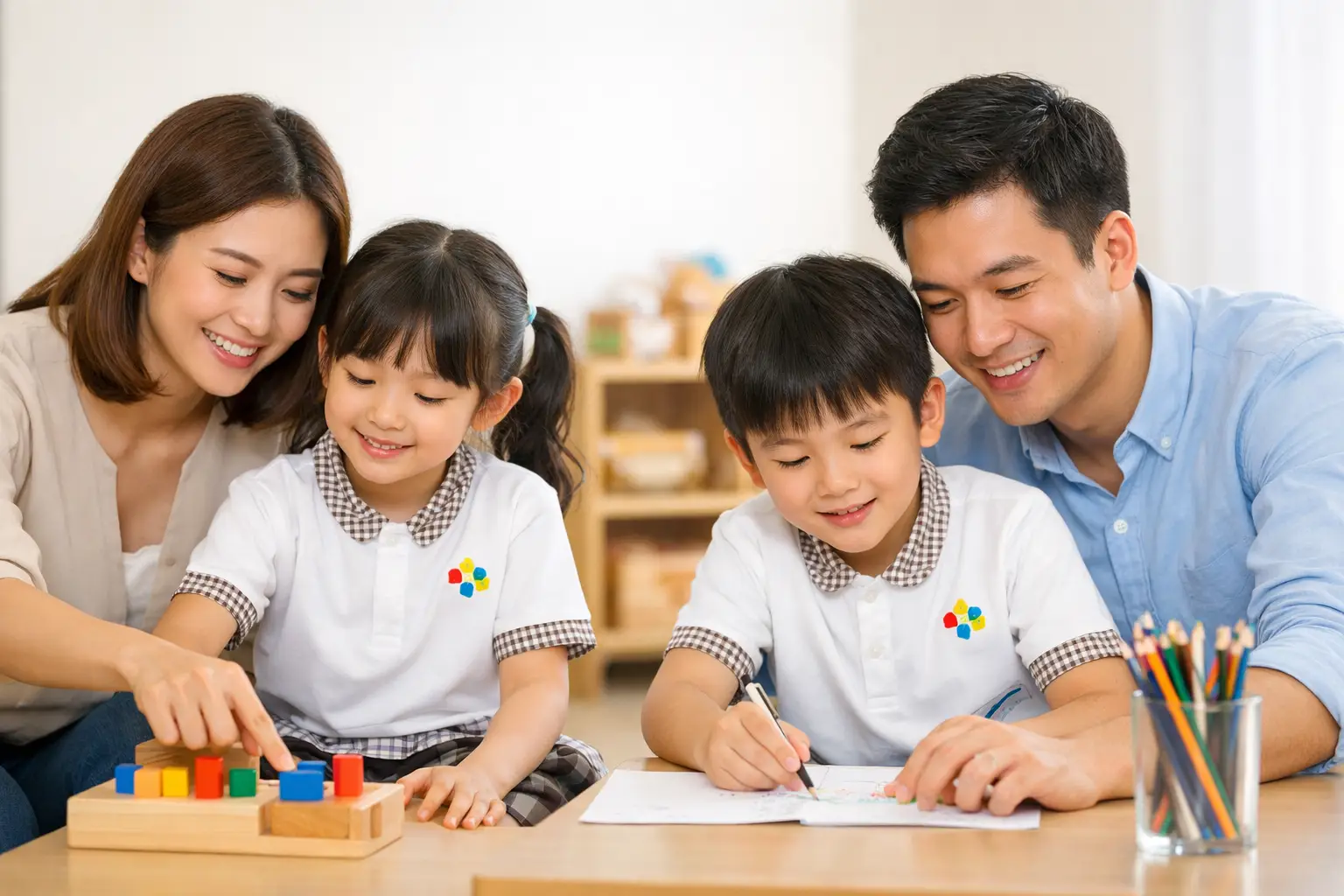
Even the best programme works best when home and school support each other. That does not mean parents need to recreate a classroom at home. In fact, children usually benefit more from consistent, simple interactions than from elaborate teaching plans.
Talk during everyday routines. Let your child hear rich language at mealtimes, bath time and on the journey home. Read aloud regularly, even if attention spans are short. Sing songs with repetition. Encourage your child to help with manageable tasks. Give them time to answer questions instead of rushing in. These moments build vocabulary, reasoning, self-help skills and confidence far more effectively than many parents realise.
It also helps to watch your child as an individual. Some children are highly verbal early on. Others need more time but show strong problem-solving or musical sensitivity. Some thrive in group settings quickly. Others need gentler transitions. A thoughtful early years learning guide should leave room for those differences. Development is not a race, and quality support is rarely one-size-fits-all.
A more purposeful start
When parents choose early education, they are not only choosing where their child spends the day. They are choosing the habits, experiences and relationships that will shape how learning feels. That is why developmental intent matters so much.
A truly strong early childhood programme goes beyond care. It nurtures communication, focus, creativity, resilience and curiosity in ways that are age-appropriate and deeply human. At A2E Kids, this kind of whole-child approach is reflected in a structured environment where bilingual development, music education, exploratory STEM experiences and active learning work together to support meaningful growth.
The early years do not need to be hurried to be powerful. When children are guided with warmth, expertise and purpose, they gain something far more valuable than a head start – they gain a strong foundation for learning, relationships and life.
Leave a Reply