A child who asks for the same bedtime story each night is doing far more than enjoying a familiar tale. They are learning that sounds carry meaning, that pictures and words belong together, and that language can help them remember, imagine and connect. This literacy foundations guide explains how these early moments shape confident communication and future reading – without turning childhood into a series of lessons.
For infants and preschoolers, literacy is not about memorising long word lists or rushing towards worksheets. It begins with warm conversations, songs, gestures, stories and the freedom to share an idea. When children feel heard and capable, they are more willing to experiment with language, ask questions and make sense of print.
What literacy foundations really include
Literacy is often reduced to reading and writing, but its foundations are broader. A young child needs to hear and use language before they can confidently read it. They need to notice sounds before they can connect sounds to letters, and they need enough fine-motor control to make marks before handwriting becomes comfortable.
The strongest early literacy experiences develop several areas together: listening and attention, spoken language, vocabulary, sound awareness, print awareness, early writing and a genuine enjoyment of books. Social-emotional security matters too. A child who feels safe making mistakes is more likely to try an unfamiliar word, retell a story or have a go at writing their name.
These skills do not all appear at the same pace. Some children talk early but need more time with pencil control; others quietly observe for months before suddenly joining a conversation. Progress is best measured through steady participation and growing confidence, rather than comparison with another child.
Listening comes before reading
Before a child can distinguish letter sounds, they need to listen closely. They learn to recognise a parent’s voice, follow a two-step instruction and notice changes in rhythm, volume and tone. Simple activities such as clapping a pattern for your child to copy, playing sound-matching games or pausing during a story for them to fill in a repeated phrase can strengthen auditory attention.
Music can be particularly valuable here. Songs, nursery rhymes and instrumental activities invite children to listen, remember sequences and anticipate what comes next. Repetition is not merely entertaining; it gives the brain practice in holding and recalling sound patterns. This supports the attention and memory needed for language learning.
Spoken language gives children something to read about
A child’s vocabulary grows most meaningfully through real experiences. Rather than only naming an object, extend the conversation. If your child points to a bus, you might say, “Yes, it is a double-decker bus. Where do you think it is going?” This introduces richer language while inviting them to think and respond.
Daily routines offer many opportunities. Talk about ingredients while preparing a meal, describe the route to school, or ask what happened during block play. Give your child time to answer. Young children often need a few extra seconds to organise their thoughts, especially when they are developing more than one language.
In bilingual homes and programmes, children may use one language more comfortably in certain settings. This is normal. A strong foundation in the home language supports communication overall and can support the learning of another language. The goal is not to force a child to perform in both languages at every moment, but to provide clear, joyful and consistent exposure.
A literacy foundations guide for everyday learning
The most effective early learning is woven into a child’s day. A brief, engaged exchange is more useful than a long activity when a child is tired or distracted. Follow their interests, keep expectations age-appropriate and repeat favourite experiences often.
Read interactively, not perfectly
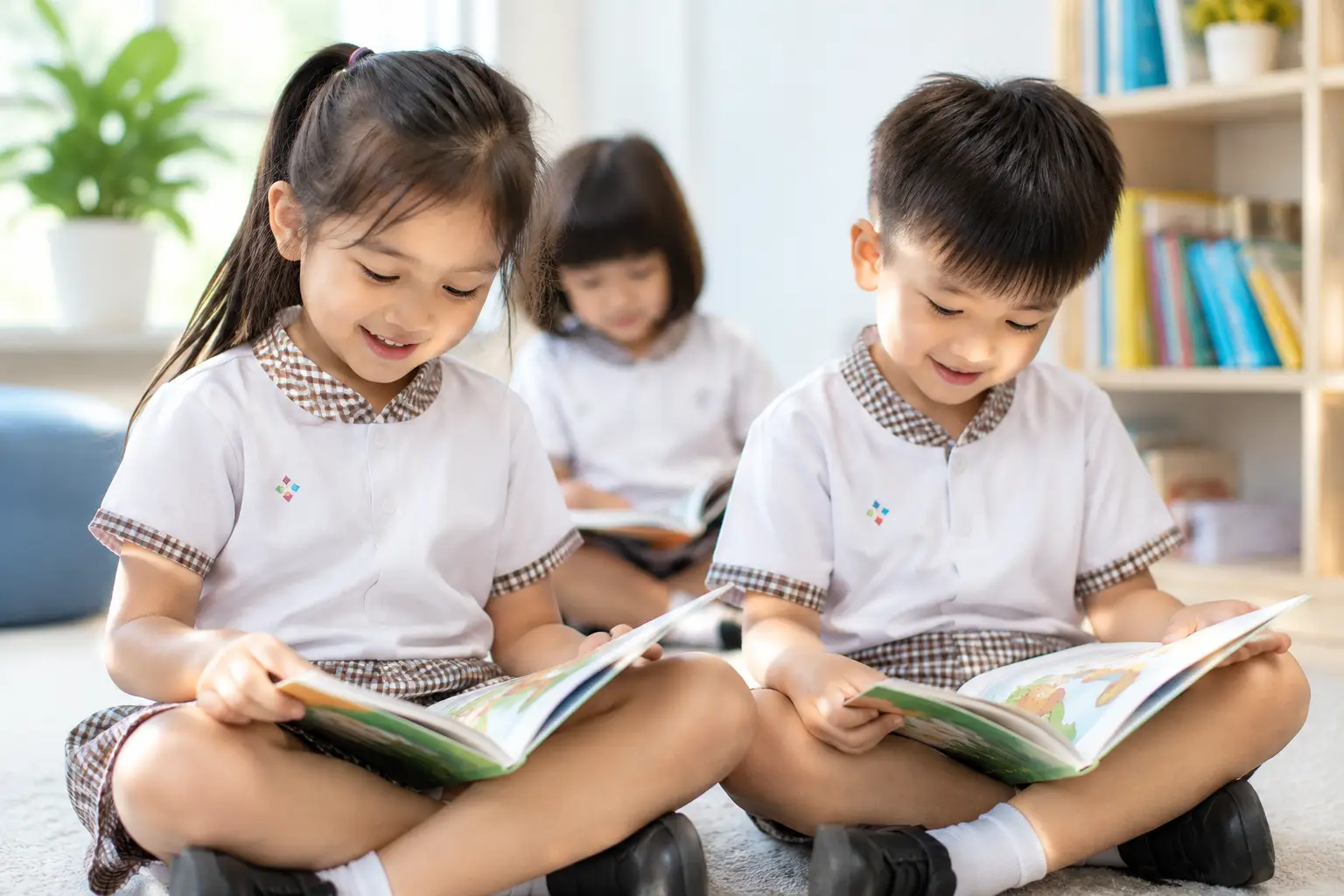
Reading aloud is one of the simplest ways to build literacy, but it does not need to be a performance. Let your child turn pages, point to illustrations and interrupt with questions. Ask, “What do you notice?” or “What do you think may happen next?” These open prompts help children describe, predict and reason.
It is also fine if your child wants the same book repeatedly. Familiar stories allow them to notice new details and begin joining in with words and phrases. For a younger child, name pictures and make animal sounds. For an older preschooler, invite them to retell the story in their own words. The aim is shared meaning, not finishing every page.
Make print visible and useful
Children begin to understand print when they see it serving a purpose. Point out their name on a bag label, notice a familiar logo, or make a simple shopping list together. Explain that writing helps us remember and share information.
At home, create an accessible space with books, paper, crayons and chunky pencils. Children may first make lines, circles and marks that do not resemble letters. These are worthwhile early writing attempts. Comment on the effort: “You made a long line across the page,” or “Tell me about your picture.” This respects their message before focusing on correct formation.
Avoid correcting every reversed letter or uneven shape. Directionality and control develop over time. If a child becomes frustrated, return to playful mark-making, drawing in sand or forming shapes with clay. The right challenge depends on the child’s readiness.
Build sound awareness through play
Phonological awareness is the ability to hear and work with the sounds in spoken language. It develops gradually, beginning with larger sound units such as rhythm, rhyme and syllables. A preschooler who can clap the beats in their name or recognise that “cat” and “hat” rhyme is practising a meaningful pre-reading skill.
Try playful language during ordinary moments: find words that start with the same sound, tap out the parts of a familiar word, or invent a silly rhyme on the walk home. Keep the activity light. If a rhyme does not come easily, model one and move on. Early literacy should protect curiosity, not create pressure.
Why movement, music and hands-on learning matter
Children learn with their whole bodies. When they trace a letter in the air, act out a story or sort objects by their beginning sound, they connect language with movement and experience. These connections can make abstract ideas easier to remember.
Hands-on exploratory learning also gives children reasons to communicate. During a simple science activity, they may predict whether an object will sink, describe a texture or explain a result. Such conversations build vocabulary, sequencing and confidence. The subject may be water, plants or magnets, but the language practice is substantial.
Music offers another pathway. Keeping a beat, recalling a short melody and following an instruction in a group activity can support focus, auditory memory and listening discipline. At A2E Kids, free violin and piano enrichment sits within a wider developmental approach because music can nurture communication, creativity and attentive learning alongside enjoyment.
Supporting literacy without creating pressure
Parents often wonder whether their child is doing enough. A useful question is not simply, “Can my child read yet?” but “Is my child becoming more interested in language, stories and sharing ideas?” Early reading may arrive quickly for some children and later for others. Readiness is shaped by development, exposure, temperament and the child’s experience with language.
Be alert to patterns that may benefit from extra support, such as persistent difficulty understanding simple language, very limited attempts to communicate, or frustration that regularly prevents participation. These signs do not automatically indicate a problem, but discussing them early with educators or an appropriate professional can provide reassurance and practical next steps.
At the same time, avoid making every car journey or meal into a test. Children need unstructured play, quiet observation and the pleasure of being listened to. A healthy literacy environment is rich in words but never relentlessly demanding.
Partnering with your child’s early years educators
A consistent approach between home and school helps children feel secure. Share the books, songs or topics your child currently enjoys, and ask educators which language skills they are observing. If your child is learning in a bilingual environment, discuss how each language is being used and how you can reinforce meaningful vocabulary at home.
Look for an early childhood programme that treats literacy as part of whole-child development. Purposeful conversations, story experiences, music, movement, creative expression and hands-on discovery should work together. When children are engaged in relationships and real experiences, language has a reason to grow.
The most lasting gift is not an early worksheet completed perfectly. It is a child who believes their voice matters, reaches for a book with interest and knows that every new word can help them understand a little more of the world.
Leave a Reply