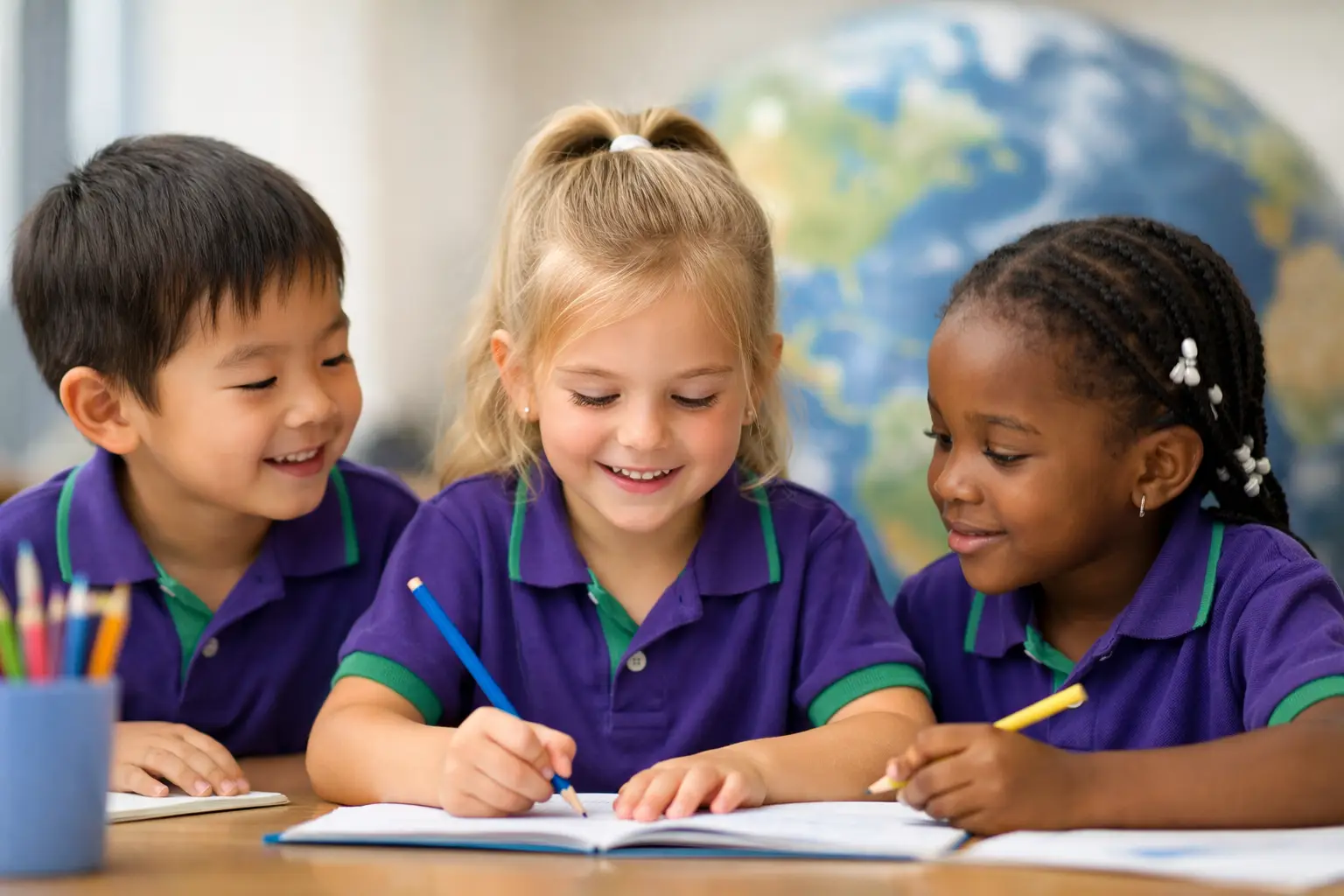
A child who is curious, confident, able to communicate clearly and eager to learn rarely arrives at that point by chance. When parents ask what the best early childhood education in the world looks like, they are usually asking a deeper question – what kind of environment truly helps a young child flourish in every area of development?
That question matters because early education is not simply about keeping children busy until primary school. It shapes language, memory, attention span, emotional security, self-help skills and the habits of learning that stay with a child for years. For families who want more than basic childcare, the strongest programmes are those that treat the early years as a foundation for whole-child growth.
What defines the best early childhood education in the world?
There is no single country, curriculum or classroom style that can claim the title outright. Different systems excel in different ways. Some are especially strong in child-led exploration, others in literacy, social development or family support. The more useful way to judge the best early childhood education in the world is to look at the principles behind excellent practice.
At the heart of outstanding early education is a simple idea: young children learn best when care and pedagogy work together. A warm, responsive environment is essential, but so is intentional teaching. Children need to feel secure, yet they also need carefully planned experiences that develop communication, thinking, movement, creativity and independence.
The best settings do not separate education from nurture. They understand that a child who feels safe is more ready to speak, explore, concentrate and build relationships. In the same way, a child who is challenged appropriately becomes more confident and engaged.
The hallmarks of world-class early childhood education
High-quality early years programmes tend to share a recognisable set of strengths. The first is strong adult-child interaction. Skilled educators do more than supervise. They model language, ask thoughtful questions, extend children’s ideas and respond with sensitivity. This is where much of the real learning happens.
The second is a clear developmental framework. Children should not move through the day at random. The best programmes are carefully organised around age-appropriate goals in language, cognitive growth, physical development, social-emotional learning and self-help skills. Structure matters, especially for young children, because repetition and rhythm help them feel secure and ready to participate.
The third is purposeful enrichment. Not every extra activity adds value. What matters is whether enrichment supports development in meaningful ways. Music, movement, bilingual exposure, speech development and hands-on learning can be powerful when they are integrated thoughtfully rather than added as decoration.
Finally, world-class early education recognises that each child develops at a different pace. A strong programme has clear goals, but it also leaves room for individual strengths, interests and readiness. That balance is often where quality becomes visible.
Why language and communication matter so much
If one area deserves special attention in the early years, it is communication. Children use language to express needs, build friendships, manage emotions and understand the world around them. Strong communication skills also support literacy, confidence and later academic learning.
This is one reason many parents are drawn to bilingual environments. When delivered well, bilingual early education can strengthen listening, flexibility in thinking and cultural awareness while giving children meaningful exposure to more than one language. The key phrase here is “delivered well”. Bilingual learning should be natural, consistent and supported by skilled adults. If it is inconsistent or tokenistic, the benefits are far more limited.
Speech and vocal development can also make a lasting difference. Clear pronunciation, confidence in speaking and comfort with verbal expression are not minor extras. They influence how children participate in group settings, how they build relationships and how prepared they feel to engage in formal learning later on.
Music, memory and attention in the best early childhood education in the world
One feature often overlooked in discussions about the best early childhood education in the world is the role of music. Yet music supports far more than performance. In the early years, it can strengthen auditory discrimination, memory, rhythm, listening and sustained attention.
When children learn through songs, patterns and sound, they are not only enjoying themselves. They are building neural pathways linked to recall, sequencing and concentration. Instrument exposure can also nurture fine motor control, patience and the ability to follow multi-step instructions.
This is where quality matters again. A thoughtful music component does not treat children as miniature performers. It uses music as a developmental tool – one that can support language, confidence, self-expression and even emotional regulation. For some children, music becomes a bridge into communication. For others, it becomes a way to deepen focus and perseverance.
Hands-on learning is not a trend
Parents often hear the phrase “learning through play”, but the quality of that play can vary greatly. The strongest early years settings use hands-on, kinaesthetic learning to help children make sense of ideas physically and concretely. Young children are not designed to learn only by sitting still and listening.
They learn by touching, sorting, moving, building, pouring, comparing and experimenting. Through these experiences, they develop problem-solving, body awareness, coordination and early mathematical thinking. They also build resilience. A child stacking blocks, adjusting a balance beam or trying again with a puzzle is practising persistence in a very real way.
That said, not all active learning is equally valuable. Busy activity without purpose may entertain, but it does not always deepen development. The best educators know how to turn movement and exploration into intentional learning moments, linking physical action with language, memory and concept building.
Care alone is not enough – and pressure is not the answer either
Many parents feel caught between two unsatisfying choices. On one side is basic custodial care, where children are safe but not meaningfully stretched. On the other is an overly academic model that pushes worksheets and formal tasks too early. Neither reflects the strongest standard of early education.
The best programmes sit in the middle with great skill. They provide attentive care and emotional warmth while also offering purposeful teaching. They respect childhood, but they do not underestimate children’s capacity to learn. They build readiness without rushing development.
This balance is especially important in the infant and toddler years. Very young children need close relationships, routine and sensory-rich experiences. They do not need pressure. But they do benefit from language-rich interaction, music, movement, responsive communication and environments designed to support emerging attention and memory.
What parents should look for in a high-quality programme
When visiting a preschool or child development centre, it helps to look beyond displays and branding. Ask how the programme supports communication, focus, creativity and social-emotional growth. Observe whether children seem secure and engaged. Listen to how educators speak to them.
Notice whether enrichment is meaningful or merely impressive on paper. A violin lesson sounds appealing, but its value depends on how it is taught and whether it supports broader developmental outcomes. The same applies to bilingual teaching, speech work and physical learning experiences.
Parents should also ask how progress is understood. Strong programmes can explain what children are developing and why it matters. They can connect daily experiences to real outcomes such as better listening, stronger memory, growing confidence, improved self-expression and readiness for future learning.
This is where an integrated approach stands out. A setting that combines nurturing care with communication development, music, movement and structured pedagogy often offers children more than isolated activities ever could. At A2E Kids, this whole-child philosophy reflects a belief that well-being and development should never be separated.
The real answer to the question
So, where is the best early childhood education in the world? In truth, it is not defined only by geography. It is found in programmes that understand child development deeply and act on that understanding every day. It is found where children are known well, taught thoughtfully and encouraged to grow in mind, body, language and confidence.
For one child, the right fit may be a highly social environment with rich language exposure. For another, it may be a structured programme with strong communication support, music and sensory learning. It depends on the child, the educators and the quality of the daily experience.
The most reassuring thing for parents is this: you do not need a fashionable label or an imported philosophy to find excellence. You need a setting that is warm, intentional and genuinely developmental in its practice. When a child is nurtured with care, challenged with purpose and given room to grow fully, that is where exceptional early education begins.
The best choice is often the place that helps your child feel secure enough to explore, expressive enough to be heard and inspired enough to love learning from the very start.
Leave a Reply