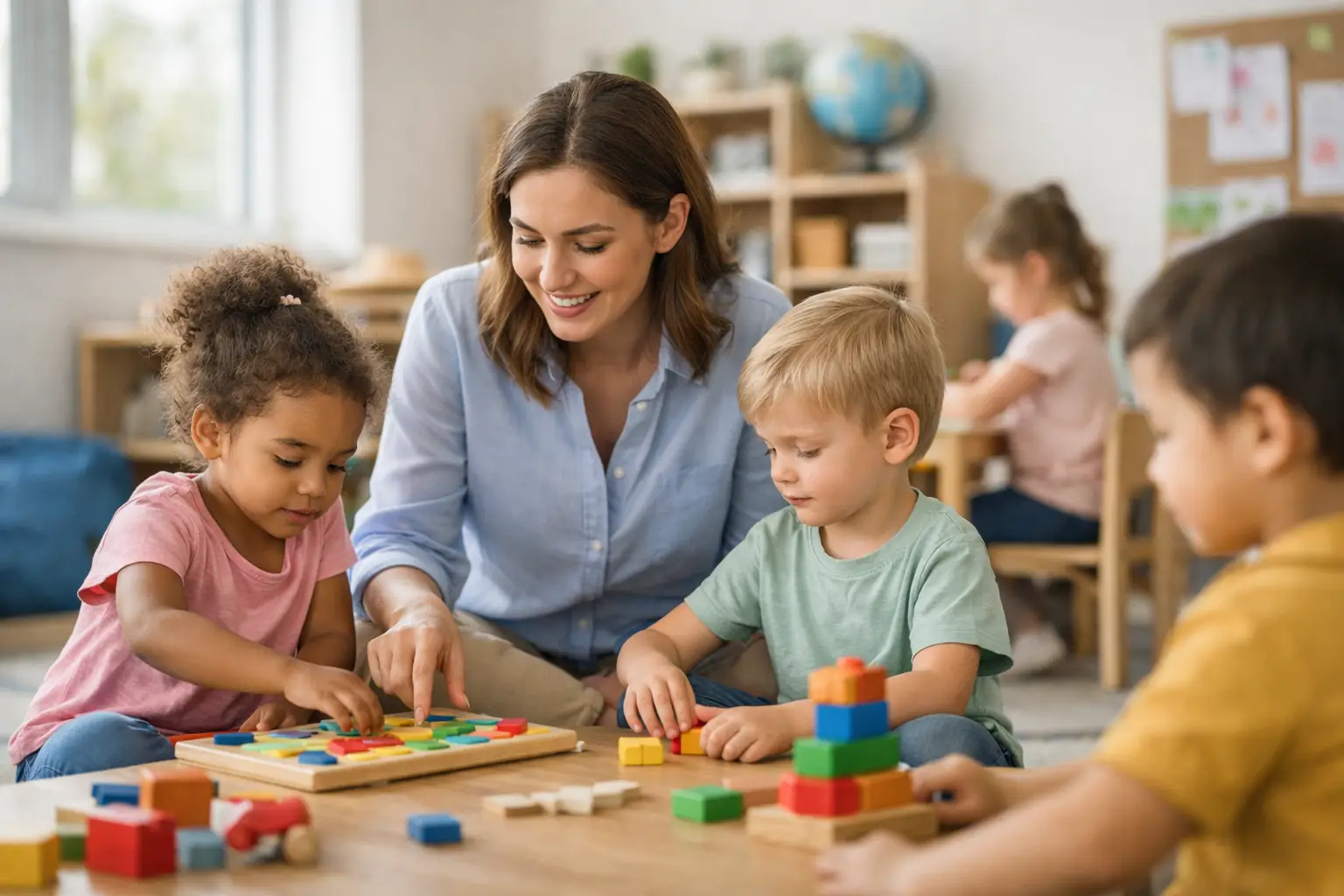
A child who is asked questions, encouraged to explore, sung to, listened to and gently guided through daily routines is not simply being kept busy. They are building the foundations for language, confidence, memory, self-regulation and relationships. That is exactly how early childhood education is important – not only for school readiness later on, but for shaping how a child learns about themselves and the world from the very beginning.
For parents, this can feel like a big responsibility because the early years move quickly. Babies become toddlers, toddlers become curious preschoolers, and every stage brings new leaps in communication, movement, thinking and emotional development. High-quality early childhood education helps make those years purposeful. It gives children the right support at the right time, in an environment designed around growth rather than simple supervision.
Why how early childhood education is important goes beyond childcare
Many families begin by looking for a safe, caring place for their child during the day. That need is real and essential. But there is a meaningful difference between a setting that watches children and one that actively develops them.
Early childhood education is important because young children learn continuously. They learn through conversation, repetition, movement, rhythm, imitation, play and relationships. A strong programme does not treat these as separate pieces. It brings them together in a structured way so children are developing cognitive, physical, social and language skills at the same time.
This matters because development in the early years is deeply connected. When a child builds stronger listening skills, they are also improving attention. When they gain confidence speaking, they often become more comfortable joining group activities. When they move, sort, stack, clap and explore with their hands, they are not only being active – they are also laying foundations for problem-solving and concentration.
That is why a thoughtful early years environment can have such a lasting effect. It supports the whole child, not just one area of learning.
The early years are a critical window for development
From infancy to around age five, children’s brains are developing at an extraordinary pace. During this period, repeated experiences help shape how children process language, manage emotions, respond to challenges and engage with others. Early education cannot determine everything about a child’s future, and no reputable educator would claim that it does. Children develop at different rates, and family life remains central. Still, the quality of early experiences makes a genuine difference.
A responsive learning environment gives children predictability and stimulation at once. They benefit from routines, but they also need rich experiences that stretch their thinking. Stories, songs, bilingual interaction, sensory play, music, conversation and guided exploration all help create strong neural pathways. These are not extras. They are part of how young children learn best.
There is also a practical point for parents to consider. Some skills are easier to nurture early, when children are naturally absorbing sounds, patterns, movement and social cues. Language development is a clear example. So are self-help habits, emotional regulation and the ability to focus for short but growing periods of time.
Language and communication start long before formal school
One of the clearest examples of how early childhood education is important is in communication development. Children do not build language only by memorising words. They learn through hearing rich vocabulary, having conversations, listening to stories, singing, responding to prompts and being encouraged to express needs and ideas.
When early education places communication at the centre, children often become more confident speakers and better listeners. This has wider benefits than many parents first realise. Strong communication supports friendships, emotional expression, comprehension and future literacy. A child who can explain what they need, follow instructions and participate in conversation is often better placed to settle into group learning later on.
For bilingual families, or families who value bilingual development, early exposure can be especially beneficial. Young children are highly receptive to sound patterns and pronunciation. What matters most is not pressure, but consistent, meaningful use of language in daily experiences.
Speech and vocal development can also play a role here. Activities that strengthen articulation, listening and verbal confidence help children use language with greater clarity and comfort. For some children, this comes naturally. For others, they benefit from more intentional support.
Confidence, focus and memory are built through experience
Parents often ask when children begin developing attention span, self-control and memory. The answer is earlier than many expect. These capacities do not appear all at once. They grow through repeated opportunities to listen, wait, recall, follow sequences and stay engaged.
This is one reason structured enrichment can be so valuable in early childhood settings. Music, movement, rhythm work, auditory mnemonics and hands-on learning all give children opportunities to practise attention and recall in age-appropriate ways. A simple musical pattern, repeated over time, can strengthen listening and memory. A guided movement activity can improve body awareness while also teaching turn-taking and following instructions.
The trade-off, of course, is that enrichment only helps when it is delivered with care and developmental understanding. Over-scheduling children or expecting formal performance too early can work against the goal. Young children need joy, repetition and encouragement. The best programmes know how to balance structure with warmth, and stimulation with emotional safety.
When that balance is right, children often show growth that parents can see in daily life. They may remember routines more easily, concentrate for longer, communicate more clearly and approach new tasks with greater confidence.
Social and emotional learning shapes everything else
Academic readiness matters, but it is not the whole picture. A child also needs to feel secure, understood and capable of managing everyday interactions. Early childhood education is important because it helps children learn how to be with others.
In a quality environment, children practise sharing space, taking turns, coping with frustration and reading social cues. They learn that feelings can be named, that problems can be worked through and that adults are there to guide rather than shame. These experiences build resilience and trust.
For some children, group settings are immediately energising. For others, they can be overwhelming at first. That is where skilled educators make such a difference. They observe, respond and help each child settle at a pace that respects their temperament while still encouraging progress.
Emotional development also supports learning itself. A child who feels safe is more likely to explore. A child who can recover from small disappointments is more ready to keep trying. A child who trusts their teacher is more likely to take part in language, music and collaborative activities.
Play, movement and creativity are serious learning tools
Parents sometimes worry that play-based learning sounds less rigorous than formal instruction. In reality, purposeful play is one of the most effective ways young children learn. Through play, children test ideas, build vocabulary, strengthen motor skills and make sense of experiences.
Movement matters just as much. Active kinaesthetic learning helps children connect physical action with thinking. Clapping syllables, sorting objects, role-playing stories, moving to music and exploring textures all support brain and body development together. Children are not designed to sit still for long periods and absorb information passively. They learn through doing.
Creativity is also more than an enjoyable extra. Music, imaginative play and expressive activities strengthen attention, memory, listening and confidence. Learning an instrument at an age-appropriate level, for example, can support discipline, pattern recognition and persistence. The same is true of guided vocal work and rhythm exercises.
This whole-child approach is part of what many families are looking for when they want more than standard daycare. At A2E Kids, that belief in purposeful, holistic development sits at the heart of the early years experience.
What parents should look for in a strong early years programme
Not every setting will deliver the same outcomes, even if they use similar language. Quality depends on how a programme is designed and how consistently it is delivered. Parents should look for warm and responsive educators, a clear developmental approach, strong communication with families and experiences that support multiple areas of growth.
It is also worth asking whether the environment encourages language, creativity, movement and independence every day. A good programme should help children build practical habits as well as academic foundations. That includes eating, tidying, transitioning between activities and managing small tasks with growing confidence.
Most importantly, parents should look for a setting that sees their child as a whole person. Children need care, certainly, but they also need challenge, encouragement and meaningful opportunities to grow.
Early childhood education is not about rushing childhood. It is about valuing it properly. When children are given thoughtful guidance in their earliest years, they gain more than preparation for school. They gain stronger foundations for expression, curiosity, resilience and lifelong learning. For families choosing an early years programme, that is not a small decision. It is an investment in who a child is becoming.
Leave a Reply